I first heard about Ply in January 2013 when the magazine’s Kickstarter campaign was making its rounds. Edited by Jacey Boggs, the magazine’s goals were both simple and bold: inspire new spinners, teach in-depth techniques, celebrate the diversity of spinning, support handspinning around the world, and act as a record for the spinning community. Ply met its funding goal and then passed it to raise a total of $34,455. Six months later in June, Ply was released to the world.
In July, I finally signed up for a subscription and I blame Tour de Fleece for pushing me over the edge. My main goal for this year’s Tour was to learn and practice new techniques. Subscribing to a magazine that promised to teach, inspire, and document spinning seemed like just the ticket to keep my own personal Tour de Fleece going. So, I spent the remainder of my Paypal funds, plus a little extra, and waited for the magazine to show up in my mailbox.
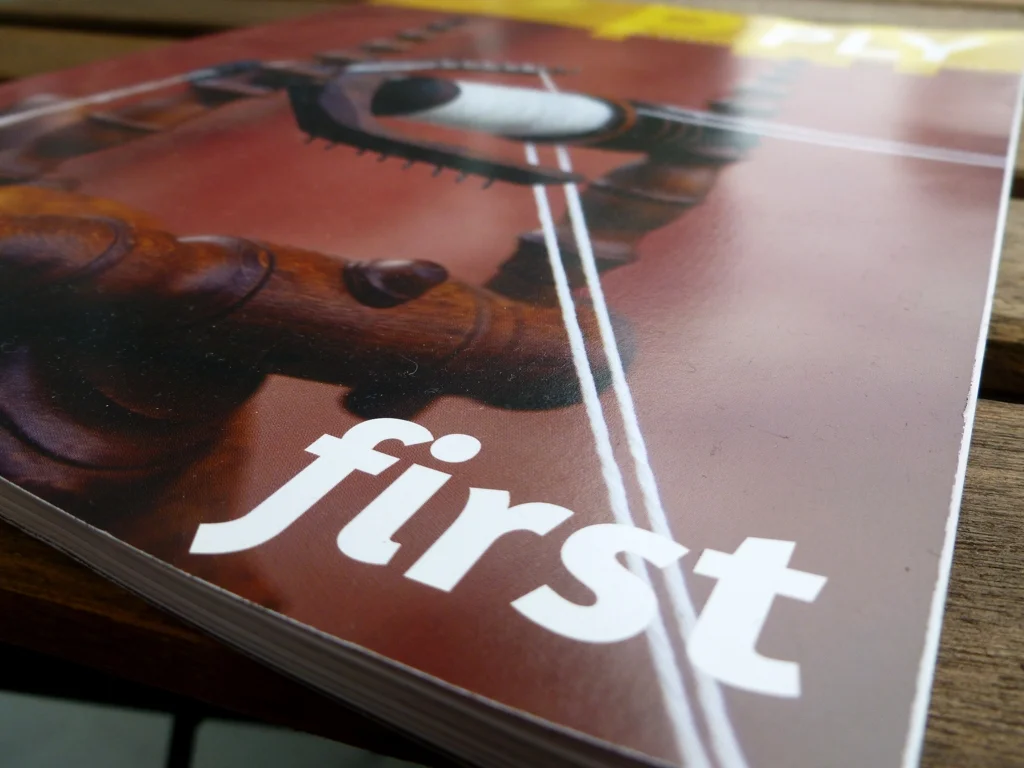
When the first issue arrived, I was pleasantly surprised since it seemed more like a book than something you’d buy from a newsstand. The cover and paper are heavier than the everyday magazine. It felt weighty and full of information. Time to read it cover to cover.
I’m usually guilty of skipping the first few pages of a magazine and going straight for the more interesting articles or knitting patterns. Not this time. Reading through “From The Editor” and later “Behind the Curtain: Why PLY?”, I was struck by how much passion Boggs and the rest of the team have for spinning as well as creating a top notch magazine. The enthusiasm isn’t limited to just those two articles but shows on every page. It’s infectious. Half of me wanted to keep reading and the other half wanted to get spinning. Sadly, reading while spinning is not a skill I’ll probably ever master. Or even attempt. I stuck with the reading.
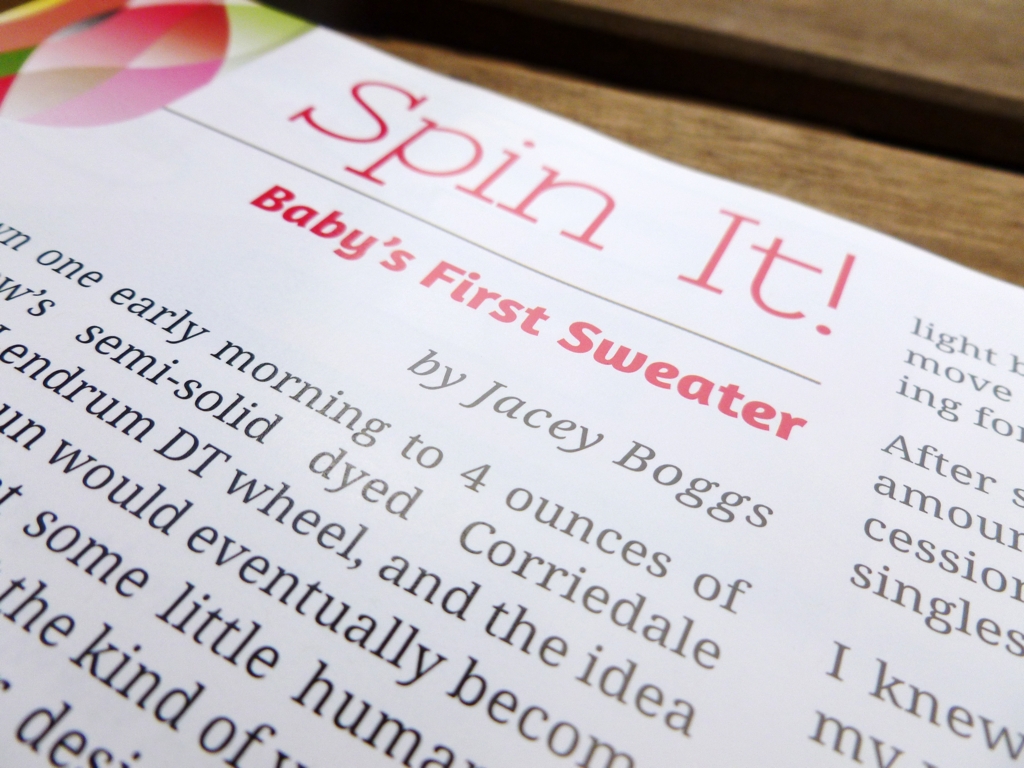
Ply’s first issue follows the appropriate theme of firsts. The articles cover everything from the very first spinners to buying your first fleece to the development of spinning wheels. The various articles are enough to grab the attention of new and experienced spinners alike. They are detailed without being boring and accompanied by useful photos. “Corriedale: The Ideal First Spin” covers a number of prep and drafting methods. Each sample and its knitted swatch is clearly photographed to show the differences.