How to Wash Excess Dye Out of Yarn

...or, I’m really tired of my hands turning blue.

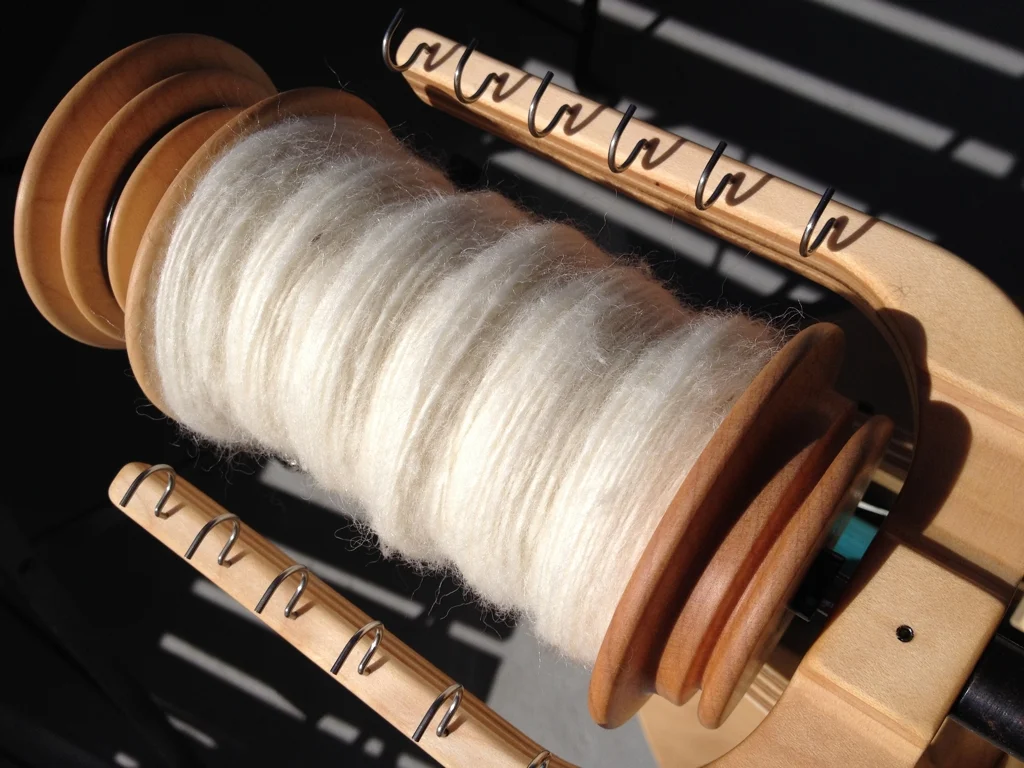
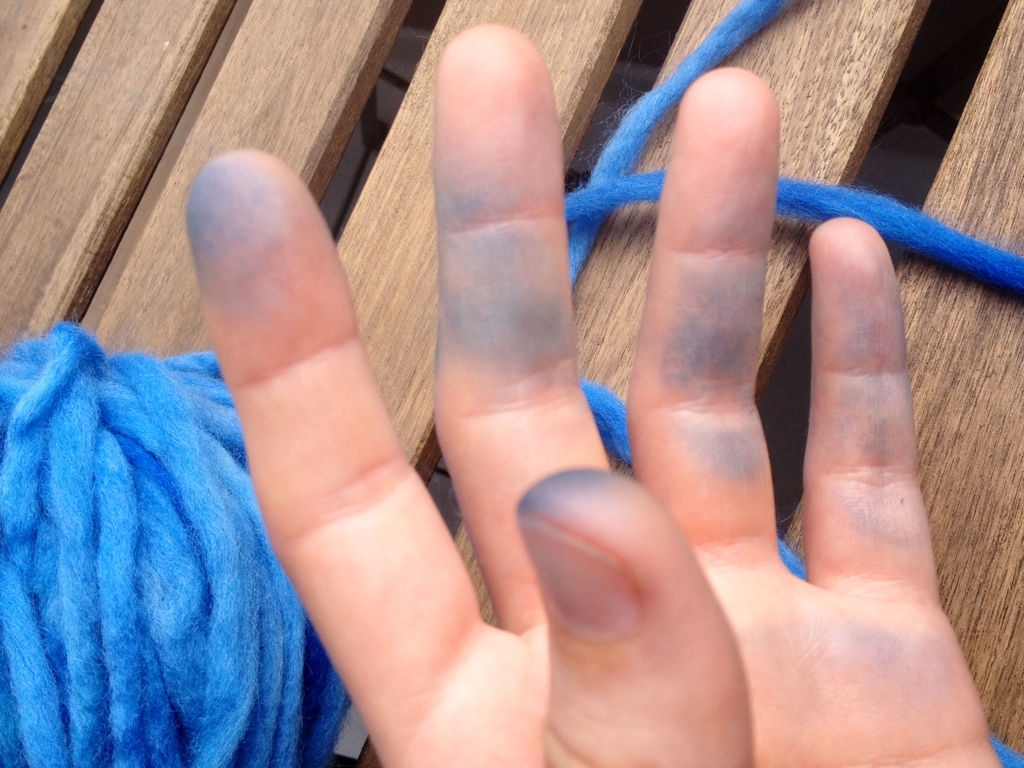
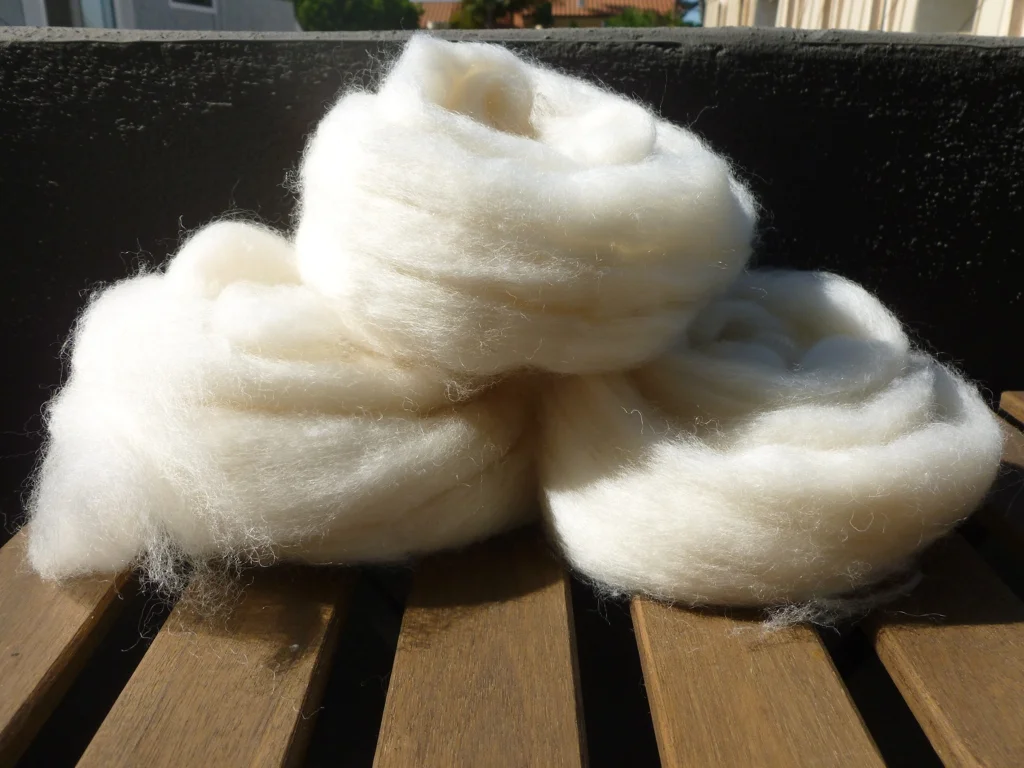
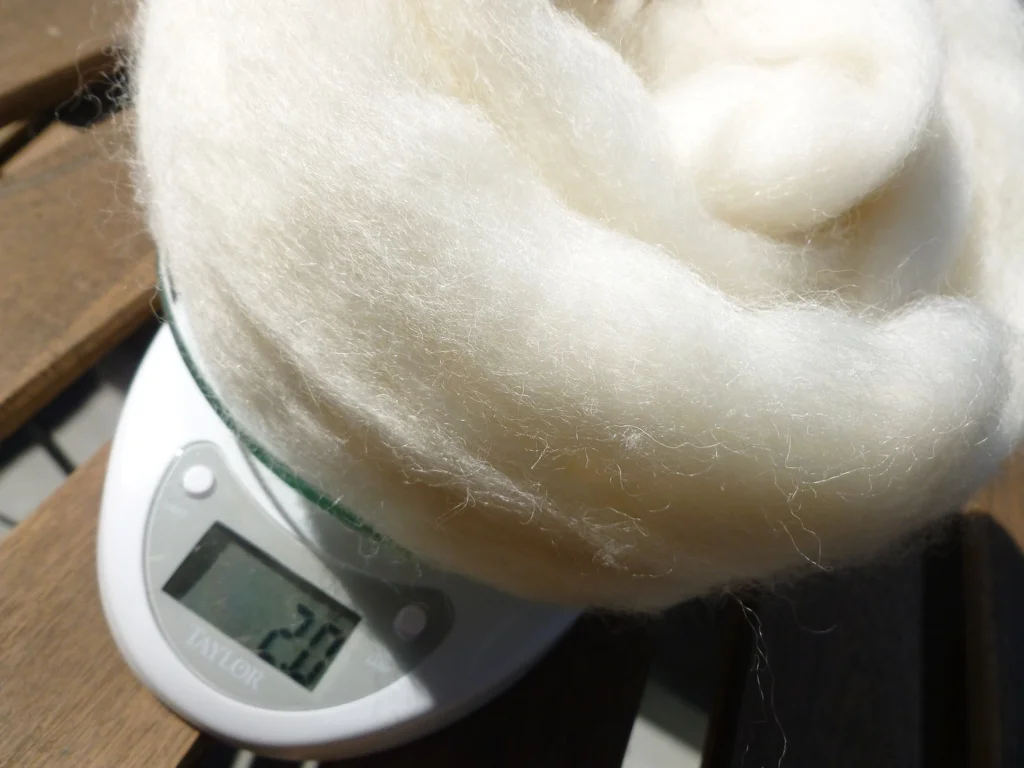
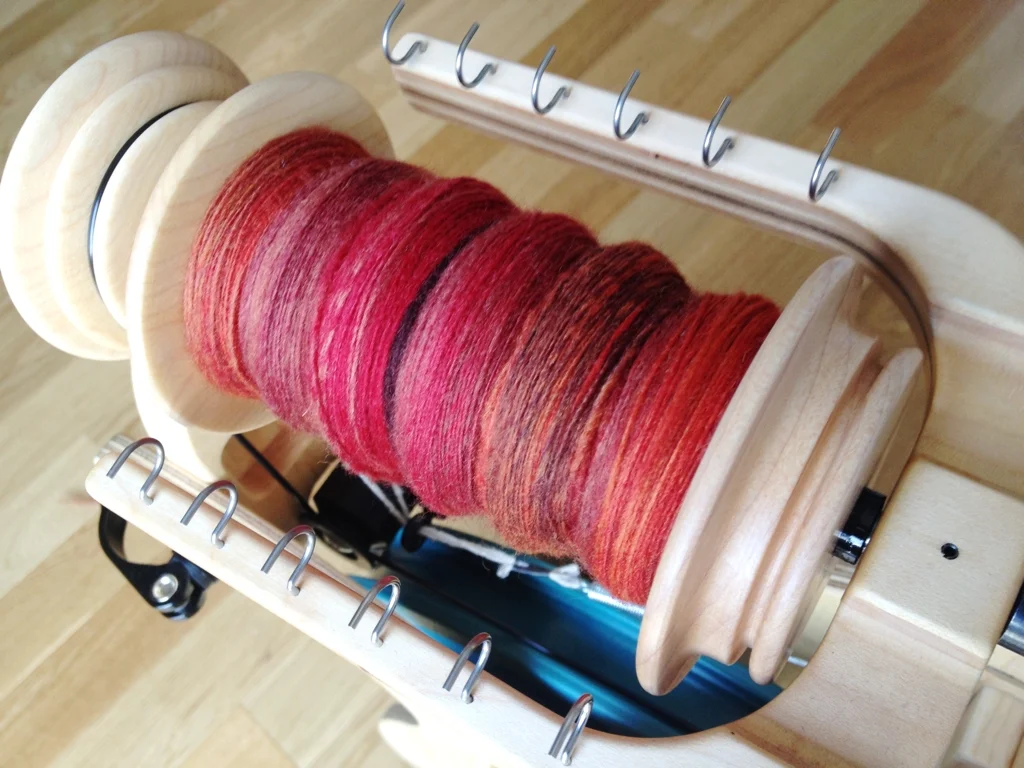
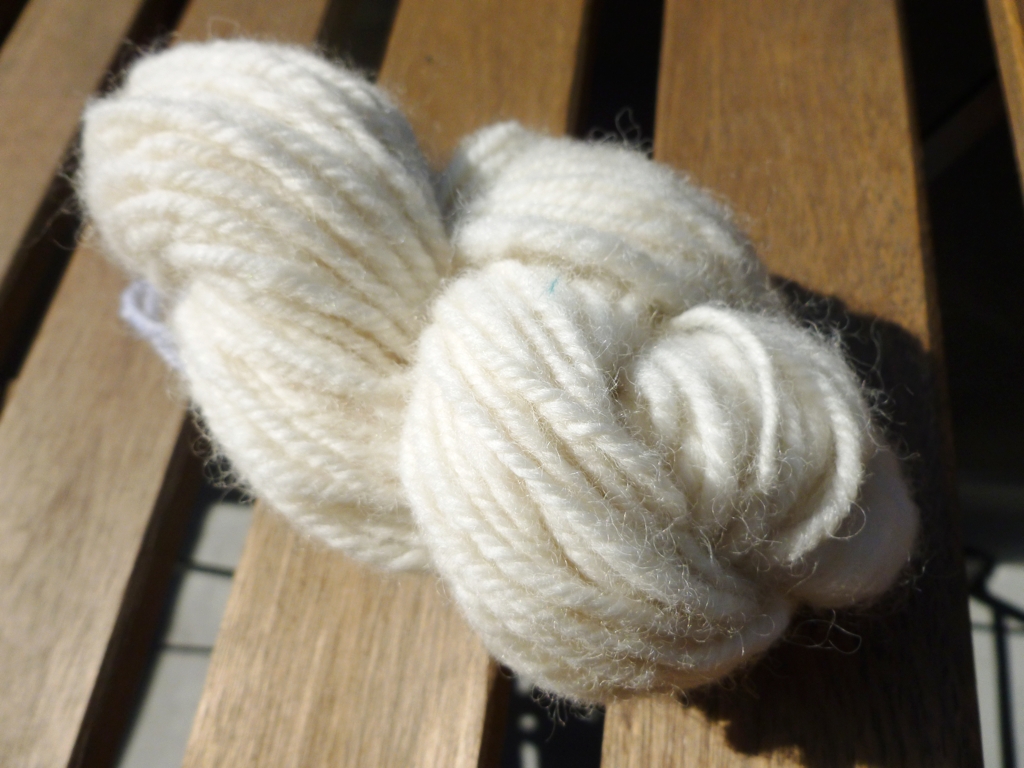
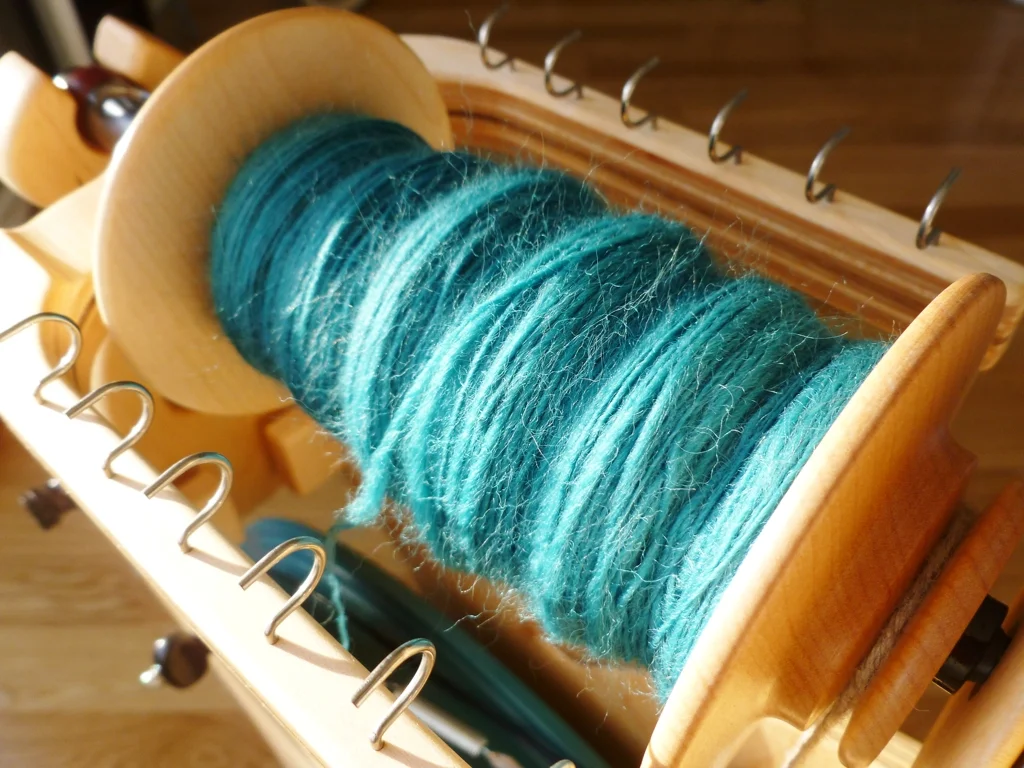
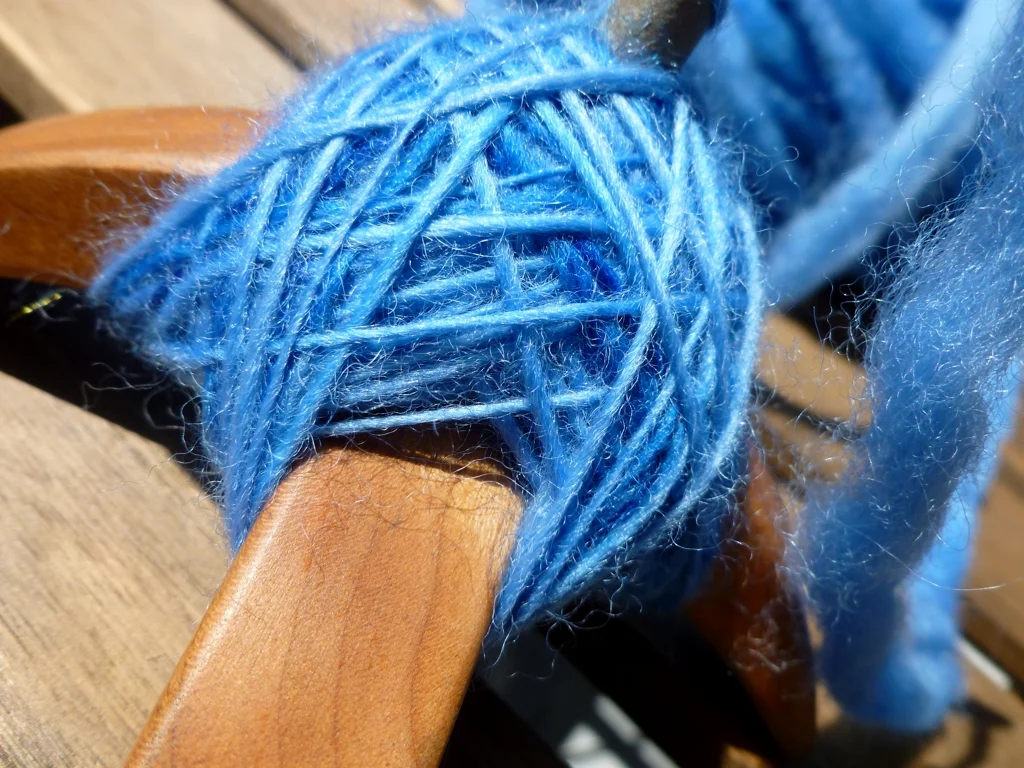
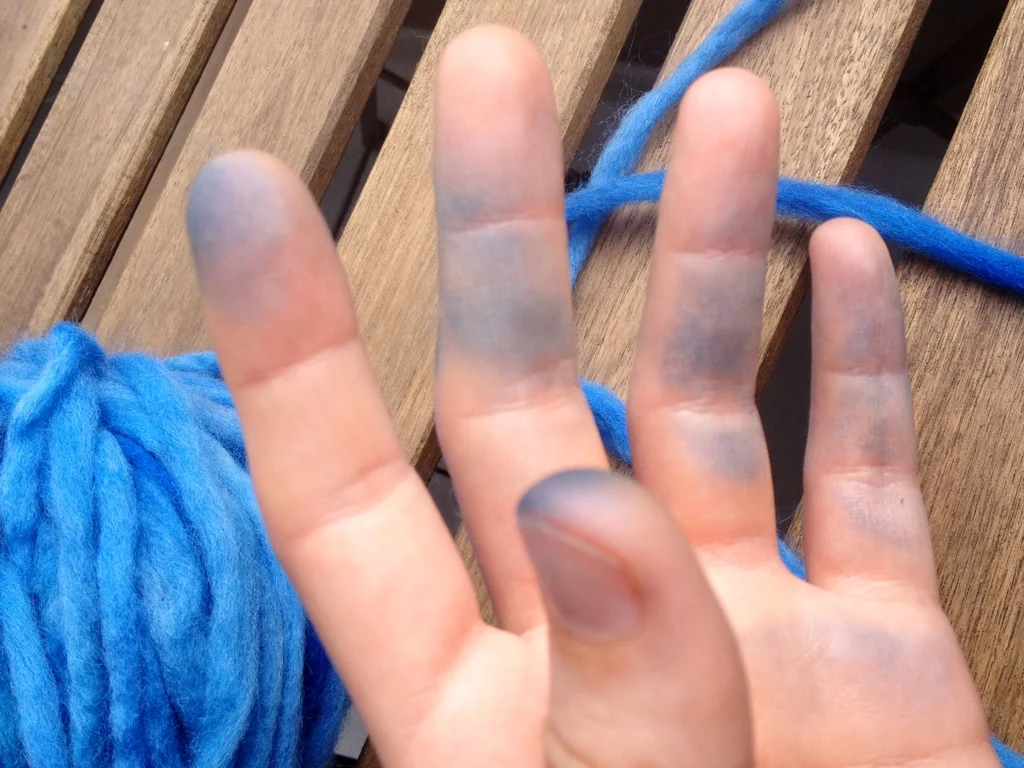
A few months ago, I was spinning some bright blue roving into yarn. The roving, besides from being easy to draft, was pretty and soft but turned my hands and spindle blue. Drafting the singles, blue hands. Plying the singles, blue hands. Skeining the yarn, oh look, blue hands. Thankfully, a bath to set the twist was a perfect time to get rid of all that extra dye. But first, research. To the internet!
SpinningPencilRoving5.jpg

My first thought was to try a vinegar bath since I’ve repeatedly heard that adding a little vinegar to the water will set the dye. Numerous blog posts and message boards later, I came to the conclusion that just soaking the yarn in vinegar wouldn’t do a thing. There also has to be heat for the vinegar to do it’s job since the vinegar acts as mordant which lets the dye set on the fiber. I wasn’t willing to cook my yarn which meant the only way to fix the blue problem was to wash the dye away. 

If, like me, you don’t put your yarn on the stove, you’ll need a sink, cool water, and good soap to wash the dye away. Wool wash is the best choice but dish detergent works too. I used a combination of Dawn Ultra and Eucalan.  

Washing-Excess-Dye-From-Yarn.jpg
1: Fill the sink with enough cool water to let the yarn soak and float. Add soap after the sink is full to prevent suds that you’ll just have to rinse away later.

2: Dunk the yarn in the water. Let it soak for a few minutes and gently swish it around. If the water dramatically changed color, immediately skip to step 3.

During the yarn’s first dunk, the bath turned so blue that I couldn’t see the bottom of the sink through 4” of water.


Washing-Yarn-Dye-Bath.jpg

3: Drain the water and rinse the yarn with as little agitation as possible. Repeat as necessary. 

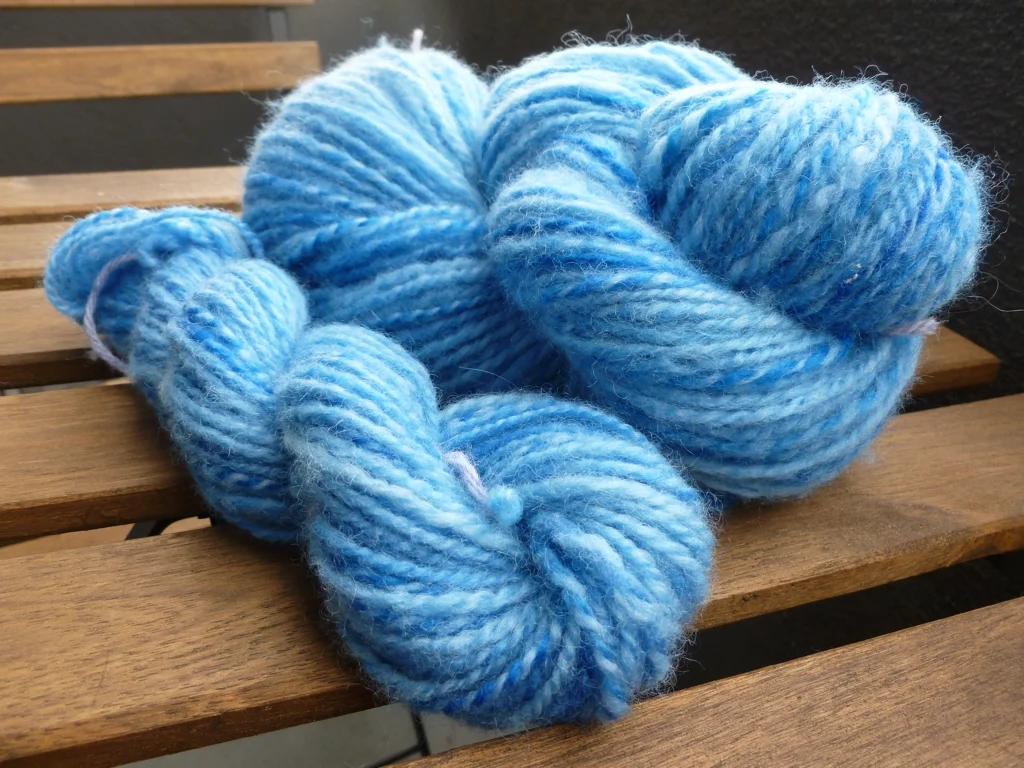
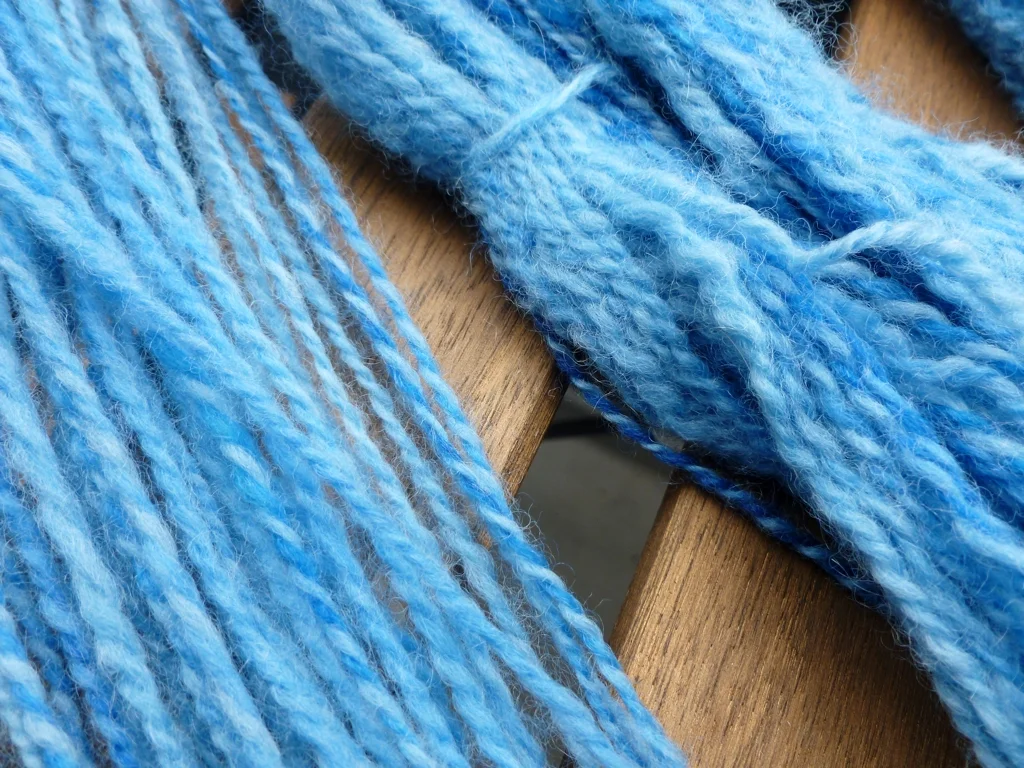
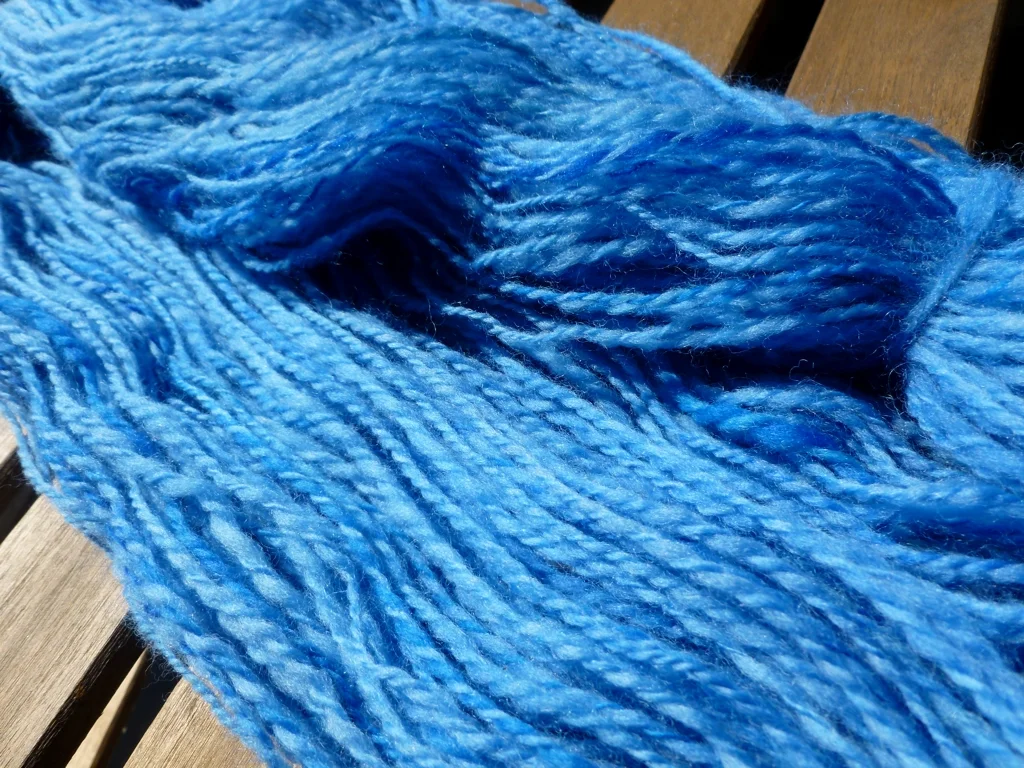
I had to put my yarn through 5 separate baths and it was still dripping blue water when I hung it up to dry.

Felted-Handspun.jpg

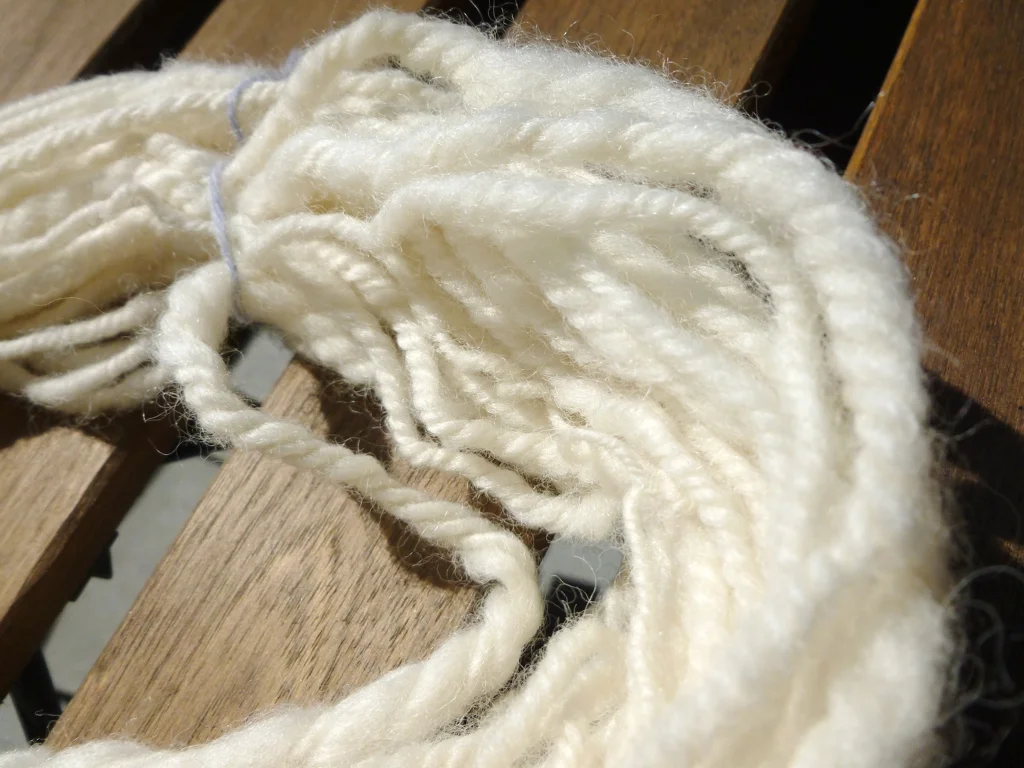
Pro Tip: Even if you’re using a soap that doesn’t need to be rinsed, agitate the yarn as little as possible. Wool and other animal fibers can still felt in cool water. All the rinsing and agitation can add up over multiple baths. If the yarn does start to felt but you catch it soon enough, the yarn will still be salvageable and knit-able. 

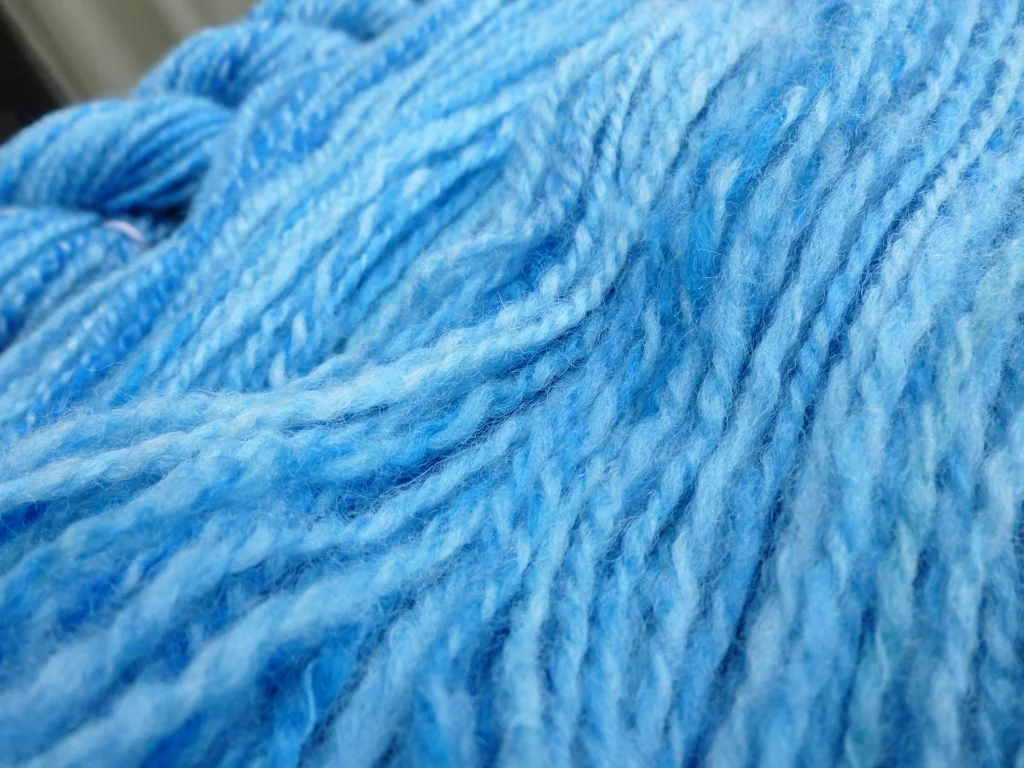
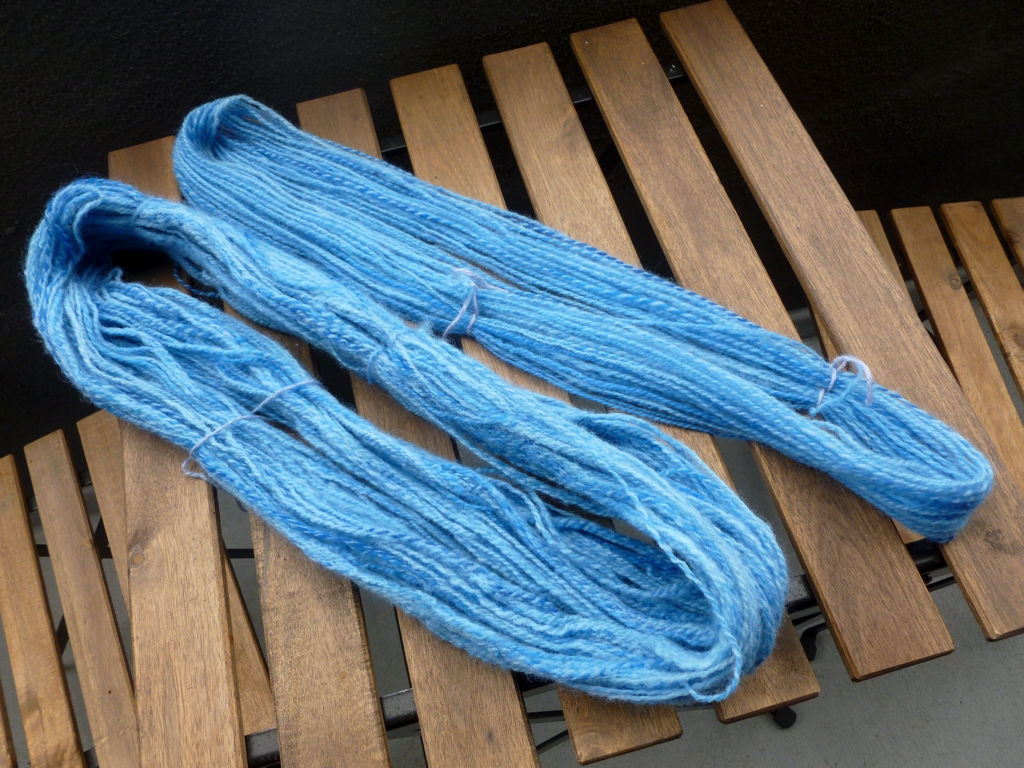
I accidentally felted my blue handspun but stopped washing the yarn when I noticed the felting. I hung it up even though it was still dripping blue water. When it was dry, I had to pull the skein apart one strand at a time. I lost some yardage to shrinkage but I didn’t have to cut anything. Surprisingly, I like the yarn better felted.

Pro Tip #2:

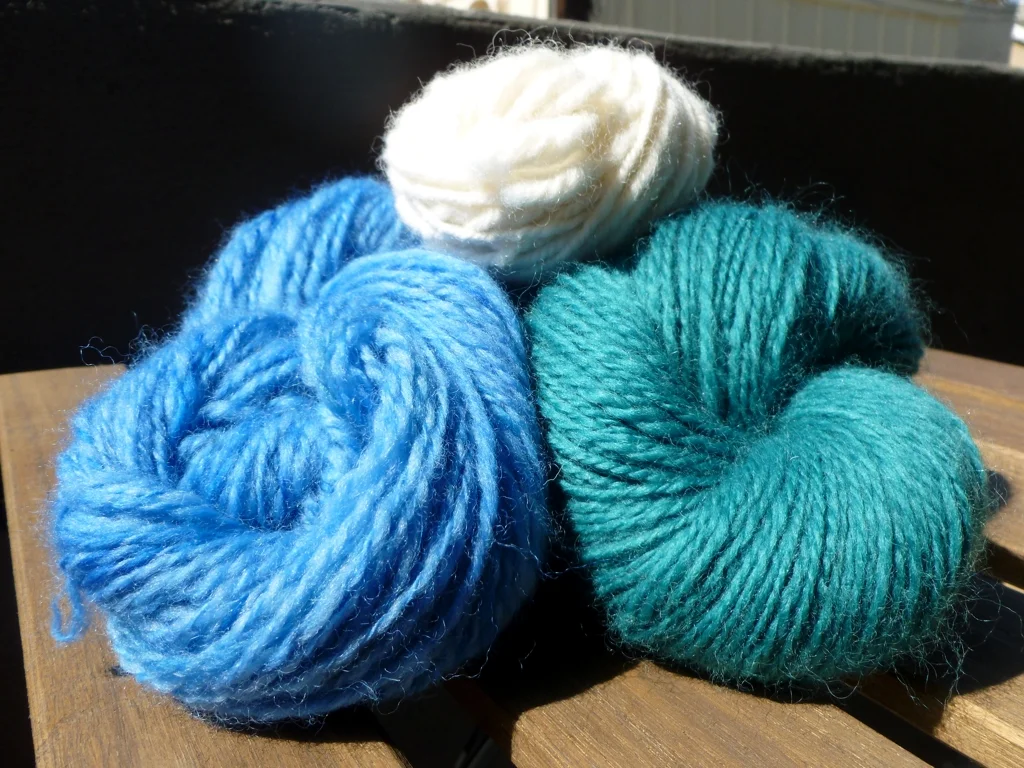
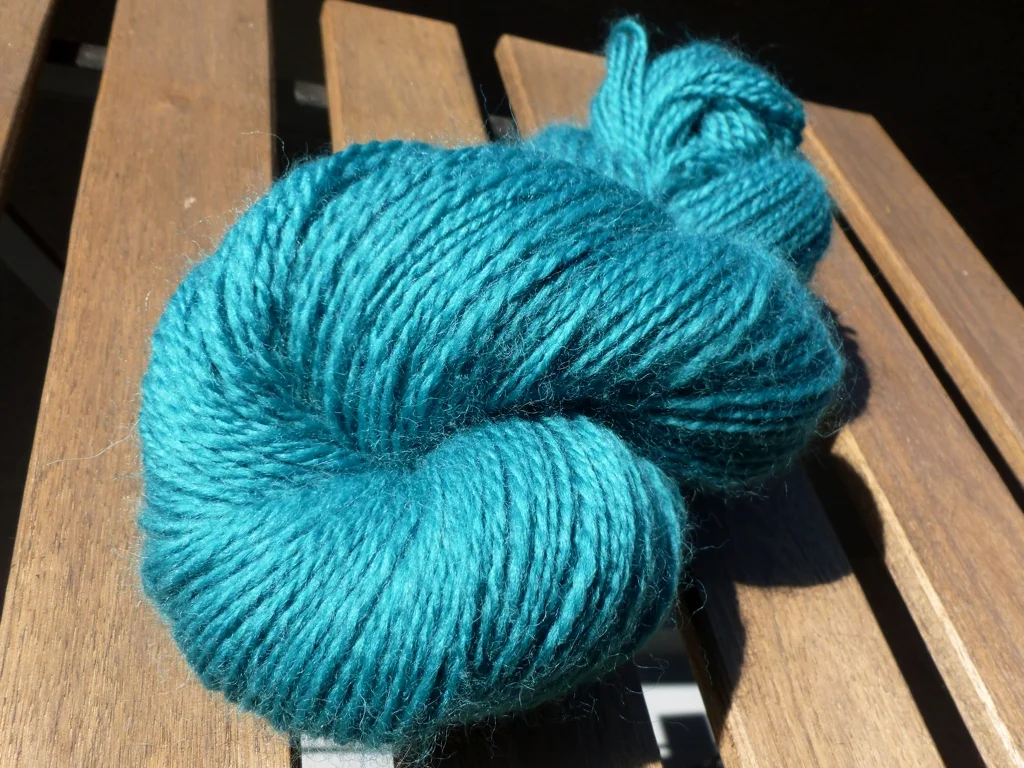
Be aware that the yarn might lose some of it's color during the repeated baths. Mine went from gym short blue to sky blue. 

Blue-Handspun-Yarn.jpg
Felted-Handspun-Spread.jpg

Wander the Web 16

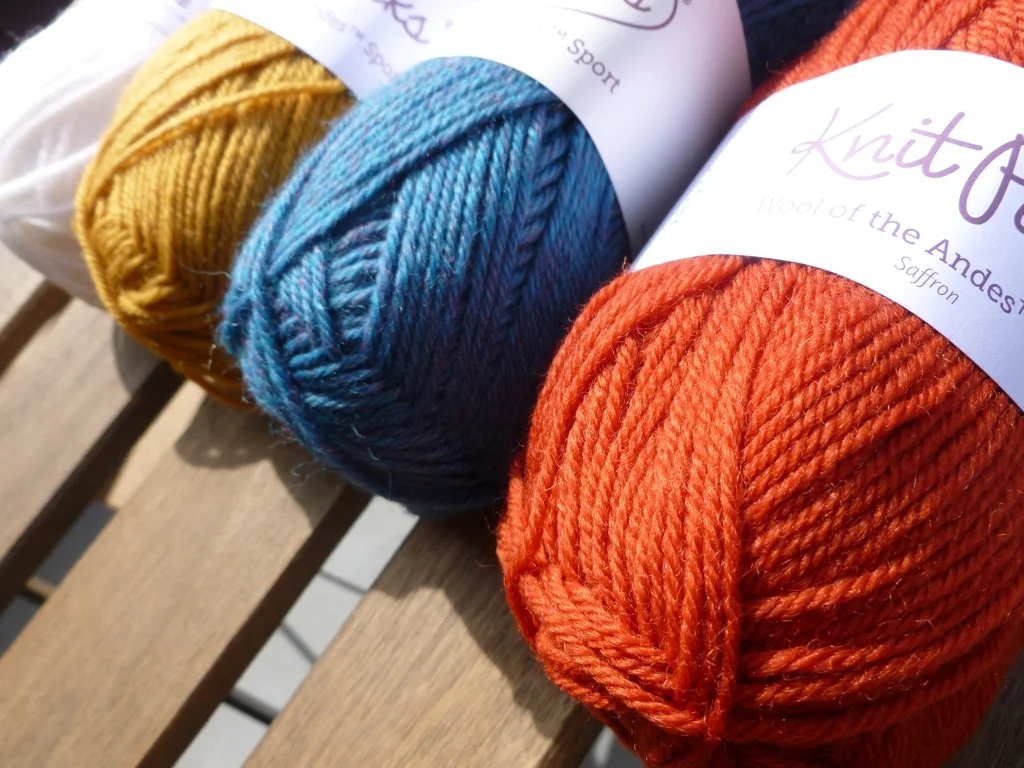
Knit-Picks-Wool-of-the-Andes-Sport.jpg

Halloween has passed and we’re right at the start of November. How are there only 54 gift knitting days left? Good luck.

Oh, here are some fun things to distract you.

The Caketrope of Burton's Team - Hey, zoetropes are amazing and this one is even better because it’s made of cake.

Horror Story by Grant Snider

Make 4 Simple Goals before 2014 

Whimsical Illustrations from Everyday Objects by Javier Perez 

Duolingo - Never to late to start learning a new language or brush up on an one.

Spinning Fat Singles

Full-Circle-Fat-Single.jpg

Sometimes you just need a creative shot in the arm. To be reminded of just of much more is out there to make and play with. To try something new instead of just sticking with the familiar. On the spinning front, that’s what the Sarah Anderson’s Spinner’s Book of Yarn Designs has done for me. Looking through it’s pages, I saw so many new things that I wanted to try. That book is treasure trove of inspiration and technique. 

One of the first yarns shown is a slub yarn where the single is thin with intentional thick bumps, aka ‘slubs’, throughout. The tutorial teaches how to spin a slub yarn but also acts as a stepping point to spinning fat and chunky singles. Anderson’s fat singles look so squishy, colorful, and consistent. Who wouldn’t want to be able to spin and knit with such a great yarn?

Fat-Single-Skein.jpg

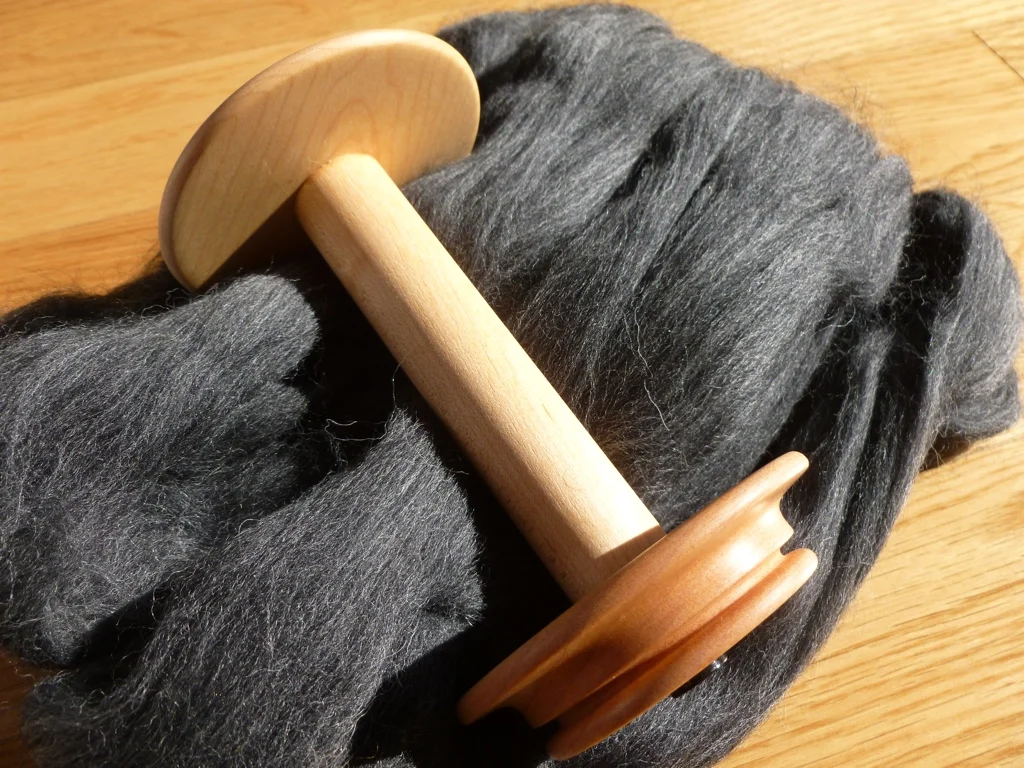
I haven’t spun anything close to a fat single or a slub yarn since I first started spinning and that seemed to be all I could make. My default yarn has thinned over the time and I wanted to see if I could bump it up a little with help from my spinning wheel. So, I set up the whorl with the slowest ratio and got started. Side note: treadling slowly takes more concentration than you’d think.

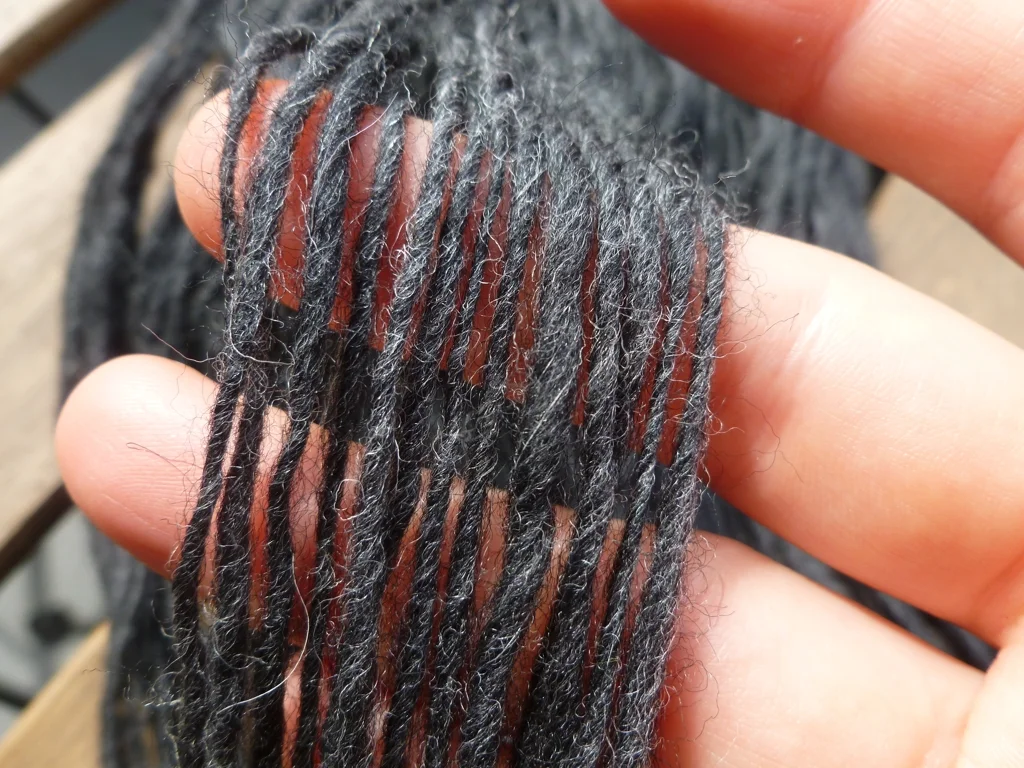
I set out of spin a slub yarn, honest, and the first few yards definitely are. However, as I got further in, it was easier to spin a consistently thick yarn than to switch between thick and thin. Since my end goal was a fat single anyway, I just went with the flow. Washed and finished, the yarn is hardly uniform. There are stretches of thick yarn and stretches of thin yarn. There are spots where the twist is just barely holding everything together. There’s also 1 knot, but who’s counting? Oh right, I am.

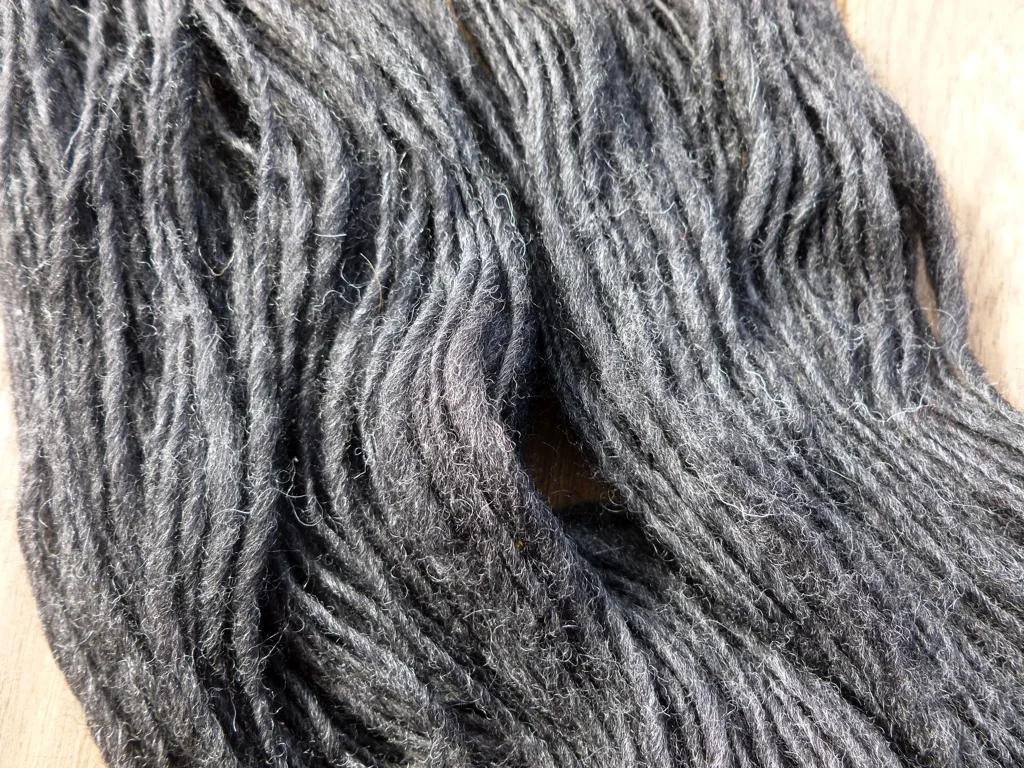
Fat-Single-Detail.jpg

Inconsistencies aside, the skein is soft and undeniably squishy. It’s definitely not the fattest or most even single but it is a step in the right direction. Only the first of many, I hope. 

The Specs

340 yds

9-14 Wraps per Inch

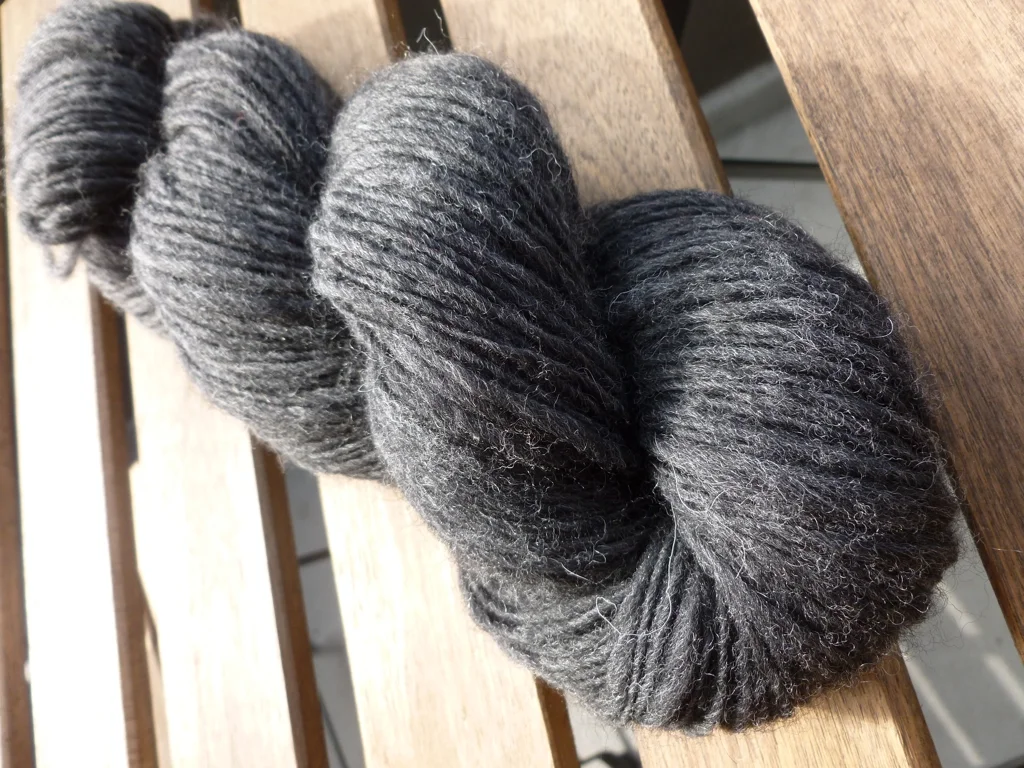
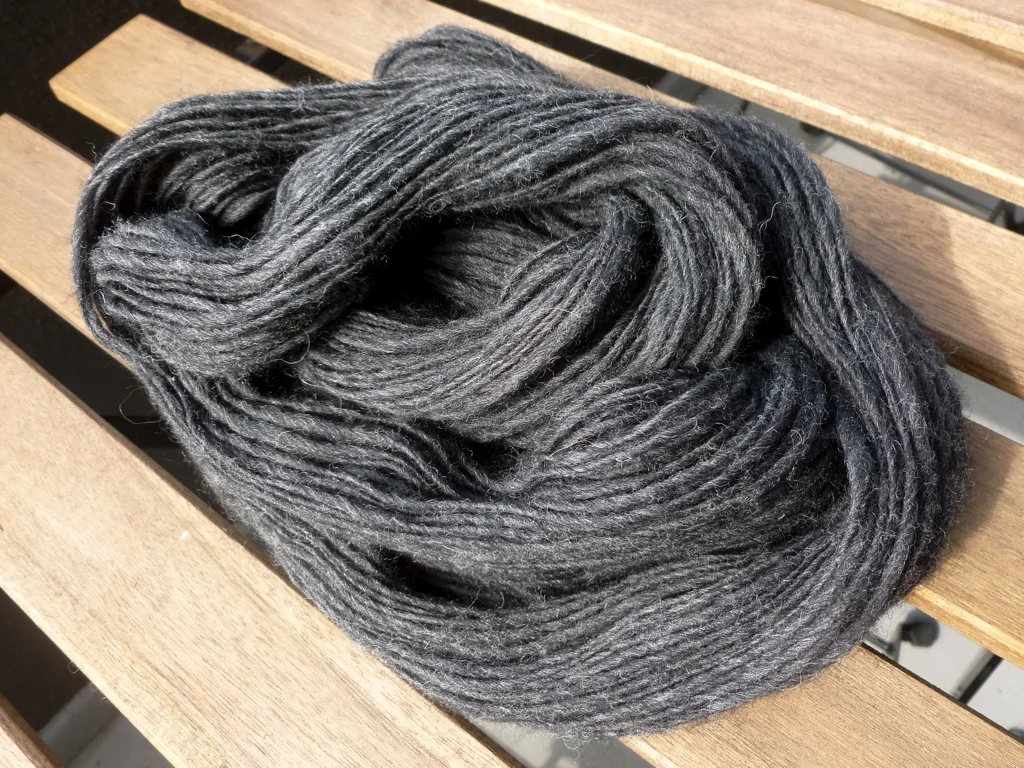
Knit Picks Full Circle Roving - Quarry

Grey-Fat-Single.jpg

Smith Rock Revealed

Spun-Abstract-Fiber-Targhee.jpg

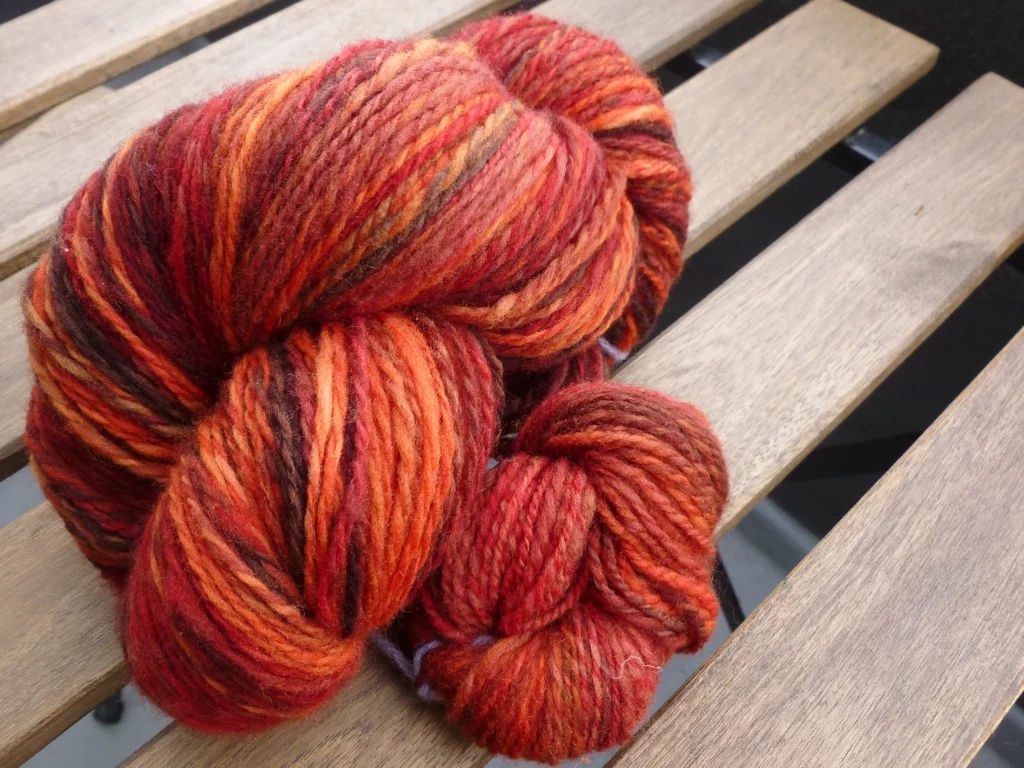
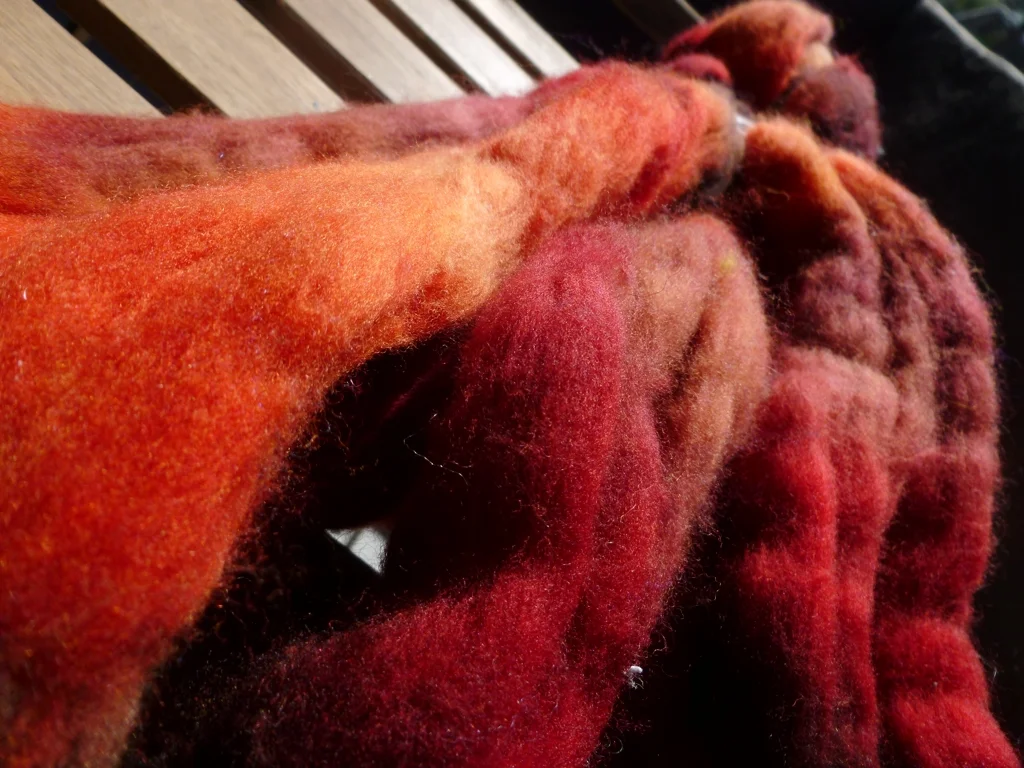
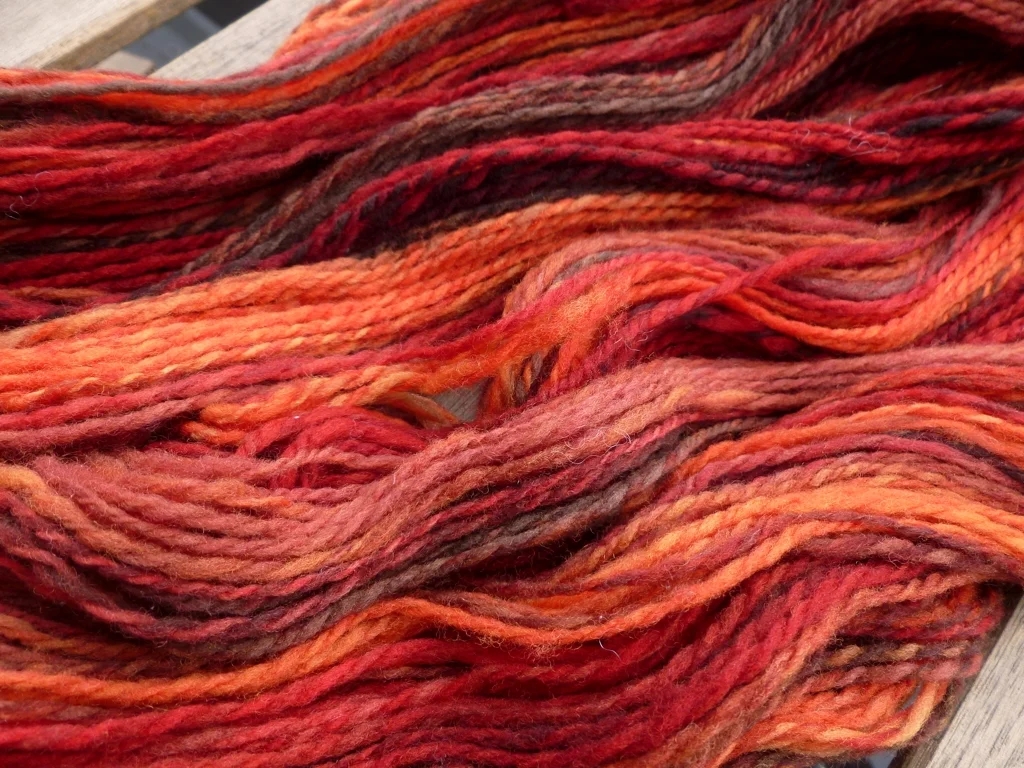
Last month, I finally visited the local spinning guild. When I stepped out of my car, I had no idea where to go so I just followed the woman carrying a spinning wheel. There was yarn, fiber, spinning wheels, and spindles all over the place. Yep, I was definitely in the right place. The meeting and people were great so I wasted no time joining up. There were even a couple local vendors selling fiber and supplies. Resistance was futile and I bought 4 oz of Targhee dyed by Abstract Fibers. The reds, browns and oranges of Smith Rock are a bit outside my usual color spectrum but were exactly what I wanted.

Abstract-Fiber-Targhee-Smith-Rock.jpg

 I split the fiber in half lengthwise and started spinning singles for a 2-ply yarn. The Targhee was wonderfully soft and drafting was easy so I was able to focus on the color as it moved through my fingers. The Bearded One noticed it too. Subdued red might not be my first color choice but it’s definitely his. He called dibs on the finished yarn. He denies it but he definitely called dibs. 

In knitting there’s a “rule” that says if don’t like something about your project, you should fix it immediately instead of pretending it’s okay for another thousand stitches. If it’s bothering you, the only difference those thousand stitches are going to make is that you’re going to have go through them first to get something you’re truly happy with. It’s a good rule. Saves time, energy, and hassle. I motion that this rule should apply to spinning and life in general too. It’s better to fix something immediately than to make a mistake worse by pretending it didn’t happen or that it’s just fine as it is. Who seconds?

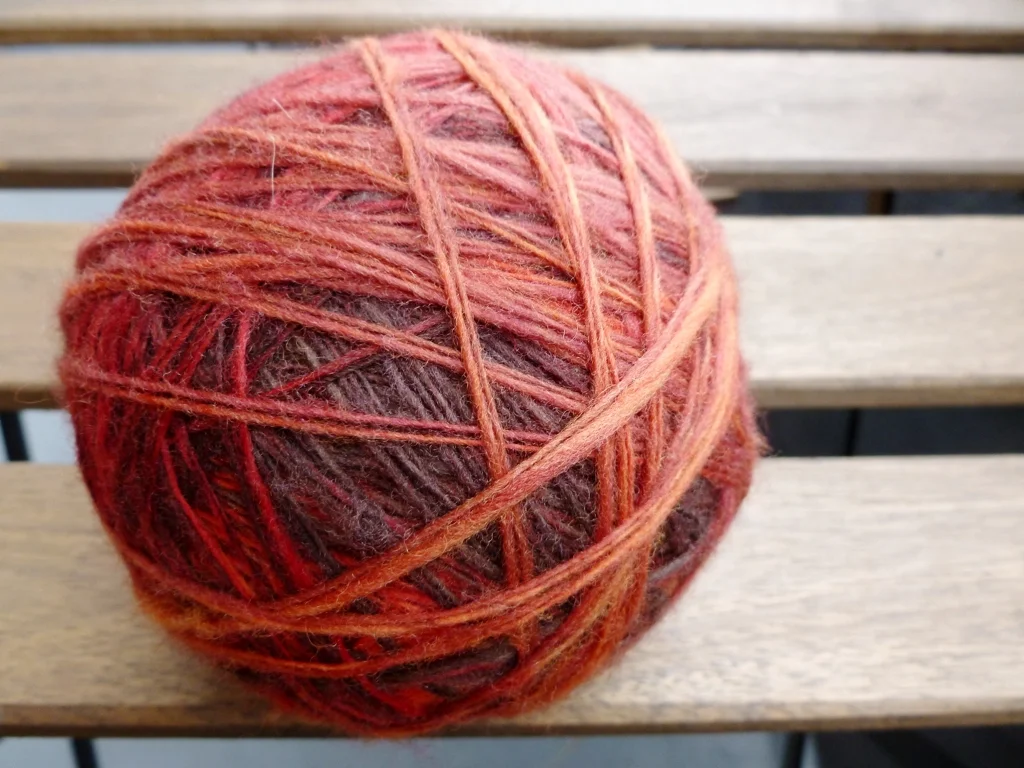
Abstract-Fiber-Plying-Ball.jpg

The reason I bring this “rule” to your attention is that we can all stand to be reminded of it from time to time. I certainly could have used the reminder when I started plying this yarn. Sometimes the colors matched but, most of the time, it was a wild barber pole. I kept telling myself I liked it and it would come together in the end. Unfortunately, the more I looked at the plied yarn, the more I didn’t like it. The only fix was un-plying the yarn and doing detailed surgery to get the colors to match. Leaving the yarn as is and shoving it into the back of the closet just wasn’t an option. Un-plying, separating the singles, and matching the colors more than doubled the amount of time I spent on this yarn. The whole misadventure involved a spinning wheel, a cardboard box, a spindle, a ball winder, scissors, and felting. A few days later I had a well matched ball of singles ready for their fourth trip through the spinning wheel.

Spun-Abstract-Fiber-Smith-Rock.jpg

 All the extra work was worth it. The finished yarn is wonderful, soft, and there’s no need to shove it into a closet. The Bearded One agrees since the colors are great and look good on him. I can’t wait to knit it up as we figure out what to make with 430 yards of worsted weight. 

Wander the Web 15

Autumn-Orange-Bobbin.jpg

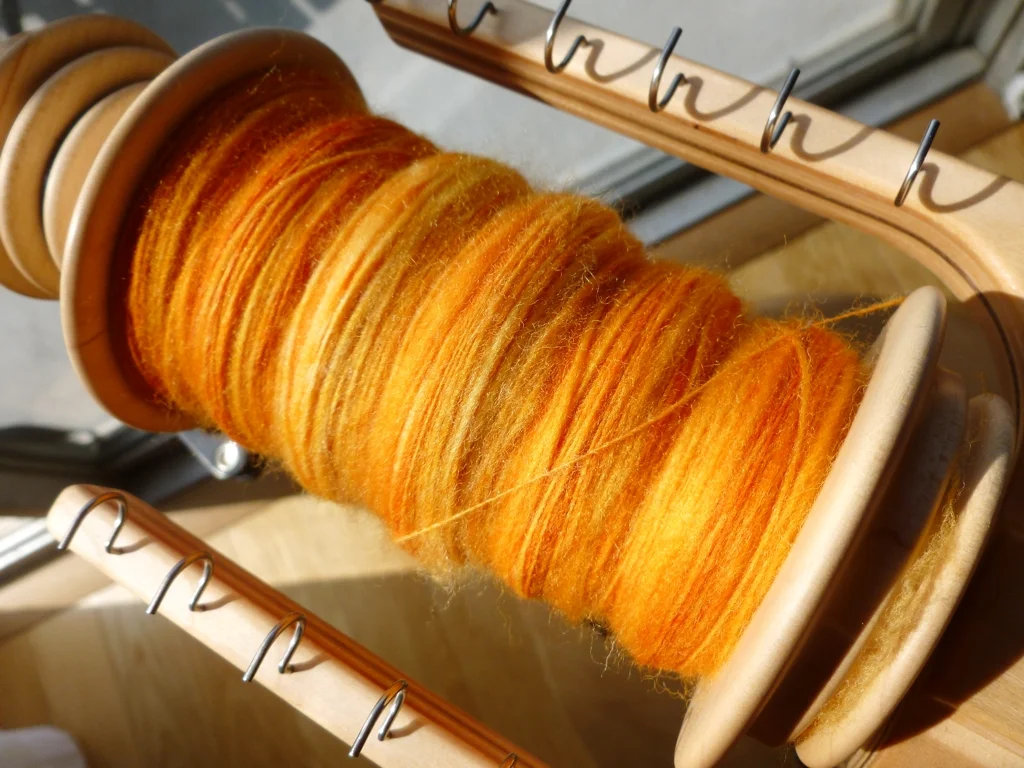
I’m halfway through spinning a lovely and slippery bump of orange superwash merino. It’s been a great big learning curve but I think I’ve gotten a handle on it. The second half shouldn’t be so tough! 

 Overnight Pumpkin Butter

What It Means to Be an Introvert

How to be a Super Awesome Fan-Girl (or Guy) at Fiber Festivals

Halloween Pom-Poms! - Skulls, eyeballs, ghosts! I must make a few of each. 

Choose your Apocalypse! 

Dark and Stormy Caramel Corn

An empty parking lot becomes a temporary mini golf course. 

Malted Chocolate Chip Whoppers Cookies - I made these cookies on Thursday and they do not disappoint.    


Wander the Web 14

empty-bobbin-with-wool.jpg

My bobbins have been empty for long enough. Time to fill them up again and try something new. I’m going to try my hand at an intentional slub yarn. Well, that’s my weekend plan. What are you up to?

Knit, Purl, Sow - A wonderful exhibit of knitted flowers and plants going on through January 2014 at the Brooklyn Botanic Garden. I’d love to see this in person. 

Abandoned: Mark Twain Public Library in Detroit

Drawings of Dustin Harbin

DIY Watermelon and Pineapple pom-poms! - Would it be weird or awesome to cover a tree entirely in pineapple pom-pom ornaments?

Knitted Fungi by Brome Leighad Martin - I’d love to walk across these mushrooms in the woods.

Spun for Spinzilla

three-spinzilla-skeins.jpg

Spinzilla is in the bag for the year. I started a day late. I spun along to podcasts, tv shows, and video games. On Saturday, I finished my third and last single. The final day, Sunday, I finished plying. Ended with 929 yards worth of singles which I turned into 310 yards of chain plied yarn. Not a bad haul of knit worthy yarn for any week.  

Spinzilla was pretty fun and I enjoyed the competition. I didn’t go all out and spin in every free moment. If I wanted to read or play video games, that’s just what I did. My wrists and ankles are thanking me for it. So what if I didn’t get to spin that happy little bump of color I got from Gwen Erin? I hit my only goal of spinning up the rest of my stashed Perendale wool.

untwisted-spinzilla-skeins.jpg


Thanks to the push from Spinzilla, I’ve reached a turning point in my spinning. Before last week, I had only spun small quantities of fiber at a time, 4 oz max. Spinning more than that on a spindle just seemed like a giant time suck that I’d get bored of halfway through and never finish. Didn’t think I could spin a consistent yarn over numerous skeins either. Well, my spindles sat out last week and I worked exclusively on my Sidekick. I spun three separate but matched skeins of yarn which I’ve never done before. Now I feel like I can spin yarn for blankets and sweaters and large projects without getting quitting halfway through. I’m even looking forward to it!

A week and a half later, I’m glad I signed up to compete at the last minute. It was fun even though I didn’t join a team. Can’t wait to try again and beat my yardage in next year’s Spinzilla.

closeup-spinzilla-skeins.jpg

Easily Measure the Yardage of Handspun Yarn

Keep losing count when you're trying to tally the yardage of handspun yarn? Here's how stitch markers can help out! | Easily Measure The Yardage Of Handspun Yarn withwool.com

Whether you're spinning for Tour de Fleece, Spinzilla, or for a particular project, you'll have to figure out how much yardage you have eventually. This locking stitch marker trick will help you keep count no matter how much you've spun. 

Keep losing count when you're trying to tally the yardage of handspun yarn? Here's how stitch markers can help out! | Easily Measure The Yardage Of Handspun Yarn withwool.com

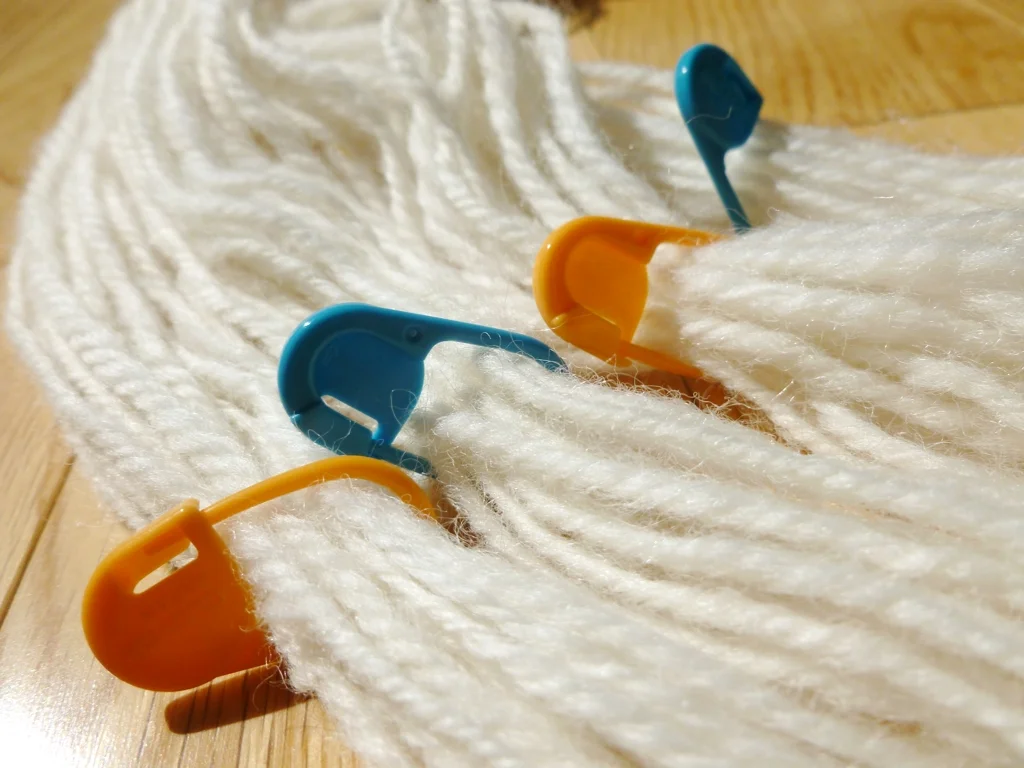
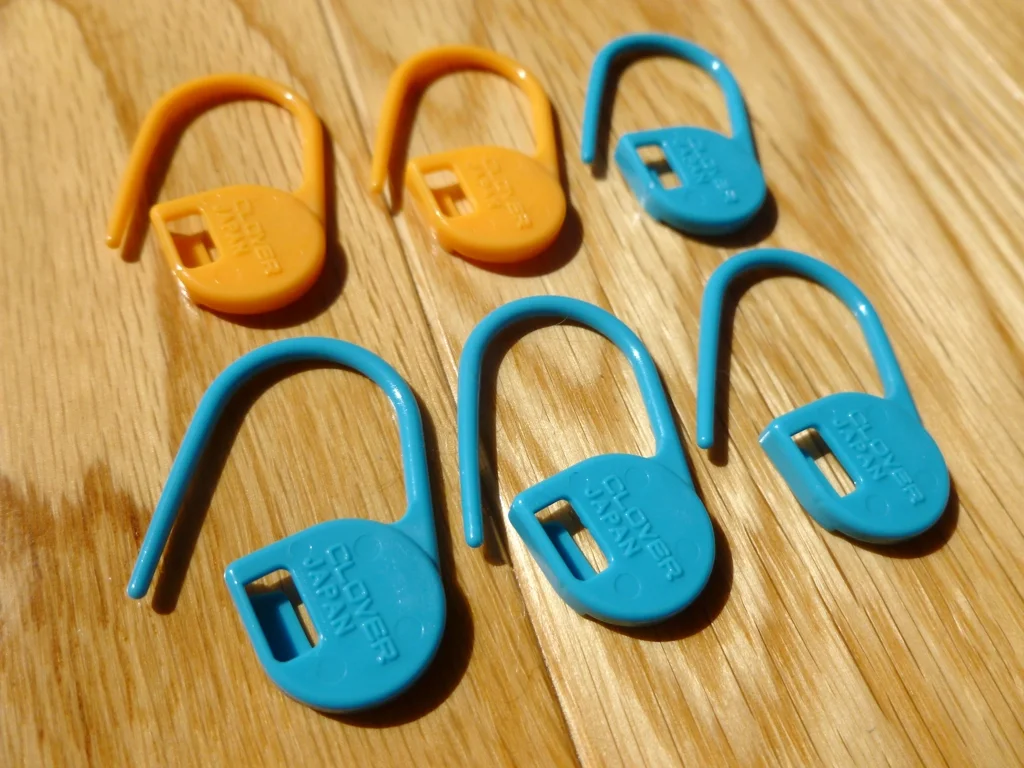
Once the singles are plied and the yarn off the bobbins or spindle, skein up all that precious yardage. Instead of counting every wrap in one go, grab some locking stitch markers and let them keep keep track of the yarn. Just count 20 wraps, or whatever number you like best, and bundle them together with the stitch marker. Repeat till every strand is corralled. Count the markers and you’ll know exactly how many wraps you have without losing count somewhere in the triple digits. No need to wonder if you’ve counted every wrap or double-counted by mistake. The stitch markers are doing all the work.

Now all the need to go is a little math. Multiply the number of wraps by the circumference of the skein and you’ll have your yardage. If you want the yardage of all the individual singles, multiple the final yardage by the number of plies.

Keep losing count when you're trying to tally the yardage of handspun yarn? Here's how stitch markers can help out! | Easily Measure The Yardage Of Handspun Yarn withwool.com

Wander the Web 13

First-Spinzilla-Bobbin.jpg

Spinzilla is already half over and I’m still spinning along. I’m over halfway through 6 oz of Perendale which smells delightfully wooly. Hope it’s all spun up by Sunday! During the moments I haven’t been producing yardage, I found some interesting links. Got to give my wrists a break some time. Good luck, fellow Spinzillians! 

Observing Earth: Satellite Photos from European Space Agency

Handknit Socks in Space!

Interview with knitting extraordinaire Leethal AKA Lee Meredith 

Learn a little about Foula Sheep

An emergency home built in 5 hours to last 15 years 

The Yarndale Bunting - Over 6,200 crochet triangles from 31 different countries decorated the Yarndale Wool Festival. The before and after photos are wonderful. (via KnittyBlog)

Fortunately Felted Handspun

Felted-Handspun.jpg

...or how I thought I ruined my handspun yarn but loved it instead. Whew. 

The story starts during Tour de Fleece when I bought some blue pencil roving. I started spinning it once my Tour de Fleece skein was finished and the roving promptly turned my hands and spindle blue. First single finished and after giving the spindle a good bath, I put the whole project on hold to find a way to keep dye off the spindle. So, it sat for a few weeks. Wrapping the spindle in paper didn’t help and it went on the shelf again. When my wheel arrived, I dealt with the blue just so I could get finish the second single and quickly ply on the wheel. The bobbins didn’t turn blue, thankfully, but my hands certainly did.  
I’ve done a little research on this fiber and brand through Ravelry and being excessively bleeding dye doesn’t really come up. The one mention of bleeding dye was for red dye, a color notorious for bleeding, and only from a small portion of a 1 pound bump. I must have just gotten a bad batch.

Dyed-Hands.jpg

Now all the yarn needed was several good baths to set the twist and get rid of all that extra dye. It took five dunks. During the first bath the water turned so dark that I couldn’t see the bottom of the sink  through 4” of water. The skeins were still dripping blue when I hung them up to dry. They probably could have used another soak or two but I’d been a bit over zealous squishing out the dye. My yarn was starting to felt. I did my best to ignore the giant, clumpy messes and hoped I hadn’t ruined them.

Felted-Handspun-After.jpg

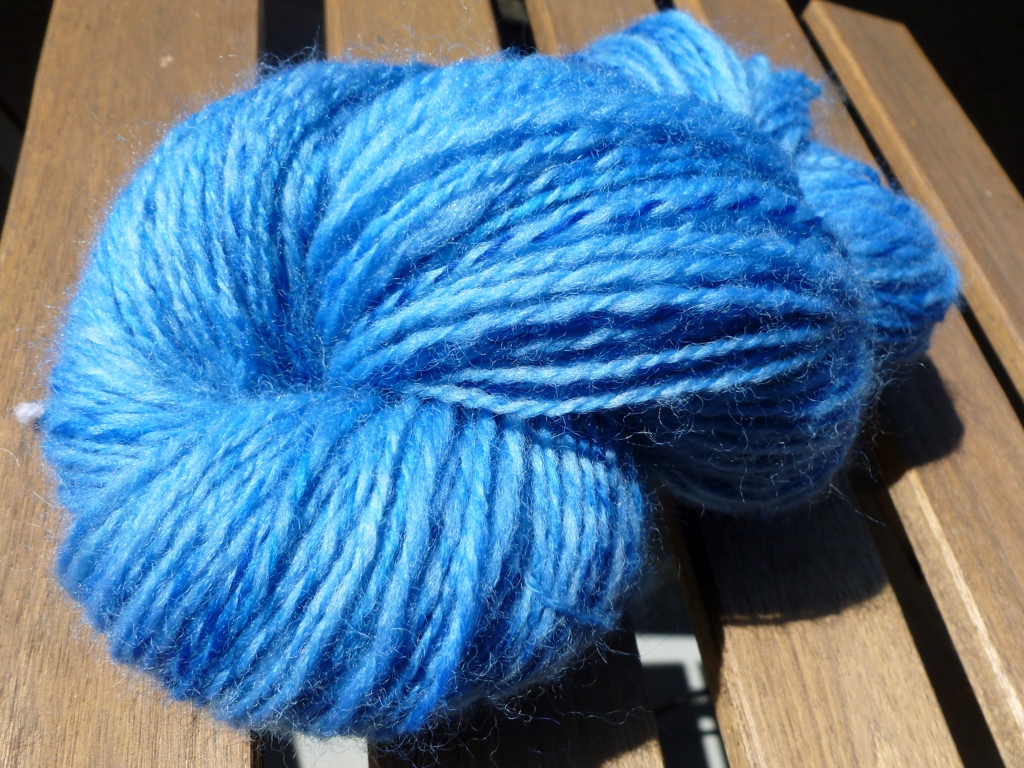
Dry, not only was the yarn salvageable but I like it much better after it’s impromptu felting. Just wish it hadn’t taken me an hour or so to pull it all apart and re-skein everything. The good news is that I didn’t have to cut a single strand.

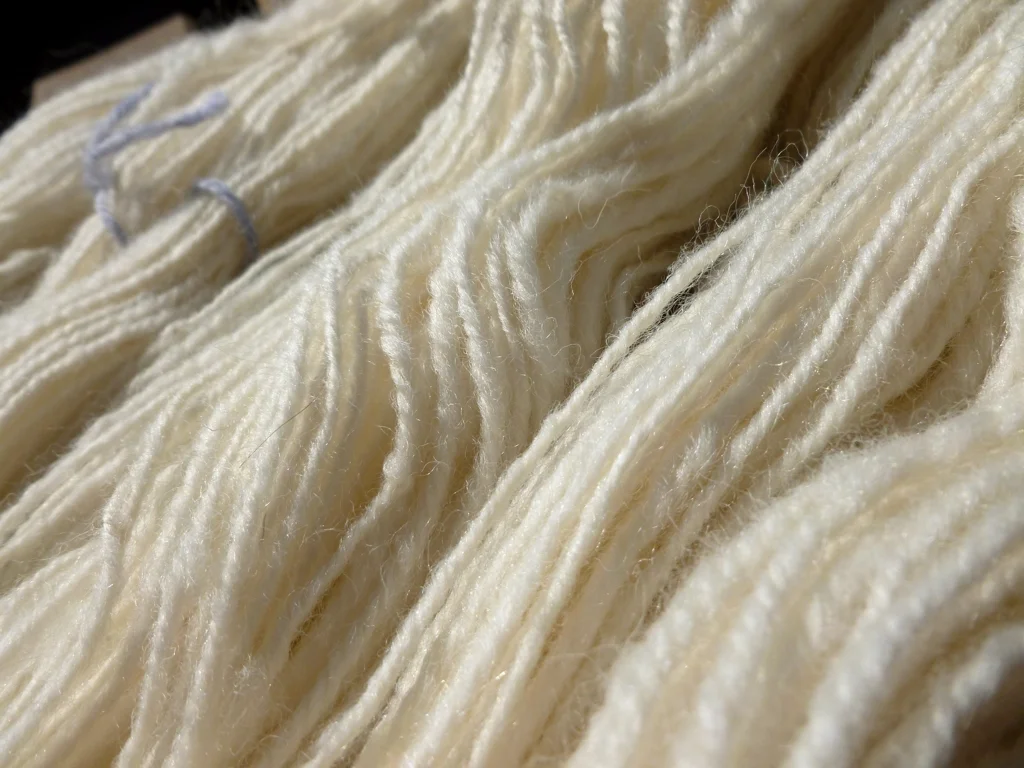
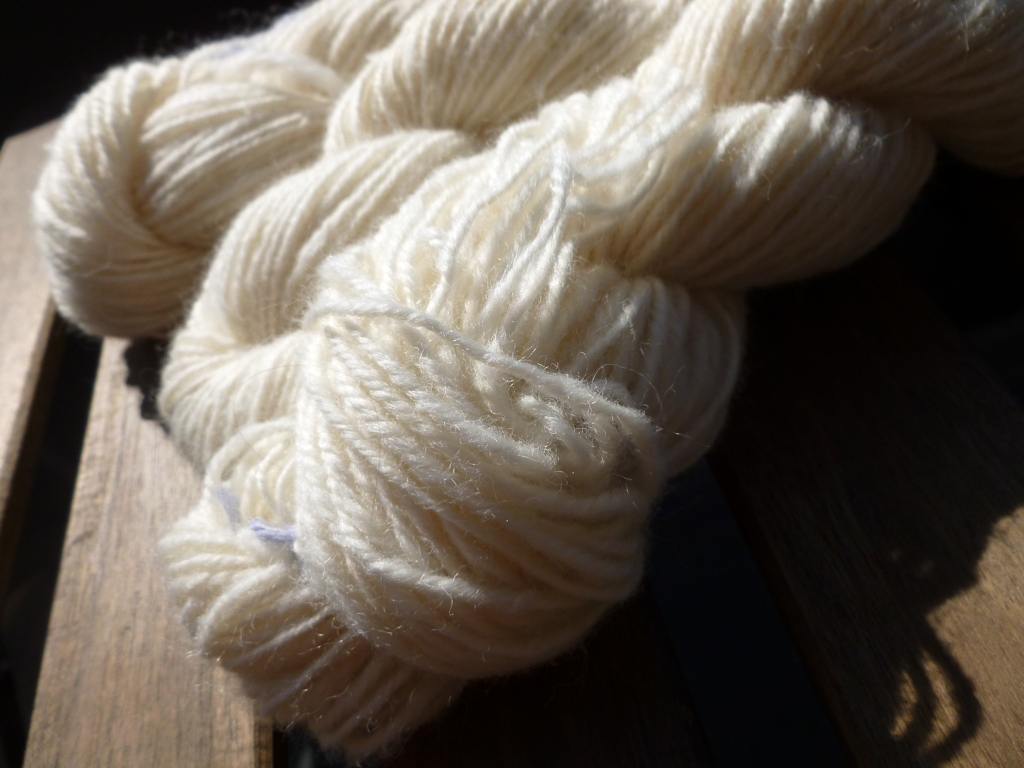
Blue-Handspun-Yarn.jpg
Felted-Handspun-Spread.jpg

 Post felting, the yarn is entirely different wooly beast. The color went from a bright gym-short to a subdued sky. Still soft, the yarn is denser but not stiff so it turned out to be a good thing I under-plied. Didn’t lose much yardage either, only about 18.5 yards, which means I still have 277 yards to play with. 

Skeined-Felted-Handspun.jpg

The Specs:

277 yards (225 + 52)

Worsted to Heavy Worsted

9-10 Wraps per Inch

4 oz of Wool

Dyed by Pagewood Farms

Straight off the spindle and the wheel this was an okay yarn. It would have gone into the stash and, eventually, I would have knit it or gifted it away. After a bath and mild felting, I want to knit it up right now into something cozy. Maybe a cowl or a scarf but, in the meantime, the skein makes a nice neck warmer all by itself.  

Starting Spinzilla

spinzilla-fiber-perendale.jpg

Welcome to the week of Spinzilla, a competition where the goal is to spin as many yards as possible. Competitors either spin yarn as part of a team or go rogue, like I did, and spin yarn for themselves. Since this is the first year, there are bragging rights, prizes and yarn on the line. 

I decided to join at the last minute thanks to the recent arrival of my new wheel, despite having only 3 bobbins. Spinning time officially kicked off on Monday but I have haven’t spun a single yard yet and I’m feeling just a lot behind. The reason I haven’t started is my last skein of yarn. Sunday morning, the yarn was plied and ready to come off the bobbin when I decided I hated the uneven barber pole it had spun into. Sometimes the colors matched up and sometimes they didn’t. I thought I could live with it during the plying but changed my mind the next day. So, the finicky process of taking apart a plied yarn began and took far longer than expected. The good news is that my bobbins are finally free for Spinzilla. 

My plan and goals for the next 6 days are simple. I’ll be spinning singles from the 6 remaining ounces of Perendale left over from the first skein I spun on the wheel just 2 weeks ago. To empty my 3 bobbins and measure yardage in the most efficient way possible, I’ll be chain plying the singles since I don’t have an easy way to storage or measure them. If, by some feat of speed, I still time left, I’ll dig into the rest of my stash. 

Who else is competing in Spinzilla? Are you on a team or going rogue? Good luck and speedy spinning!

fiber-for-spinzilla.jpg

Wander the Web 12

Abstract-Fibers-Targhee-Single.jpg

I signed up for Spinzilla at the last minute and now I’m trying to get one last skein off my bobbins. I’d already be halfway through my second single if I hadn’t spent to much time on the web looking at interesting stuff. Oh well, I’ll be finished by Sunday. I think. 

Pointless Diagrams Completely pointless and lacking meaning but pretty. 

How to Hand Felt Your Knits along with a few other techniques from knitting to embellishment to sewing suede soles on slippers. 

Adam Savage's 10 Rules for Success

Eat Pie for Breakfast (via @lamonstre) Yum, typographic pie. 

Knit.fm - A new podcast covering the craft of knitting by Hannah Fettig and Pam Allen of Knitbot and Quince & Co, respectively. 

Submarines Ascend into Milan

From the Knees of my Nose to the Belly of My Toes by Alex Chinneck

3 Skeins Spun

Wheel-Spun-Yarn.jpg

My Sidekick has been here for just over a week. I’ve spun on it everyday and I’m still amazed at how much faster the whole process is compared to working with a spindle. Seems like I’m just throwing fiber at the wheel and it magically turns into yarn. Okay, it’s not quite that fast and there’s no poof of smoke and glitter when unwinding the plied yarn from the bobbin. Should be though.

Chain-plied-perendale.jpg

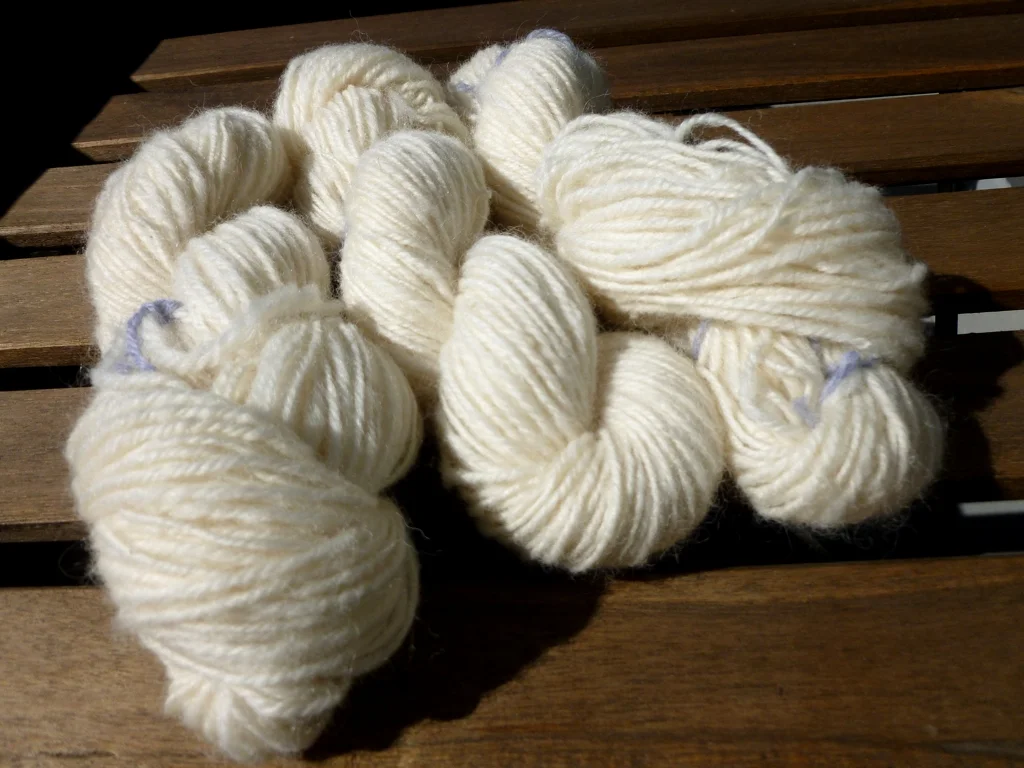
The first skein to come off the wheel was 2 oz of chain plied Perendale. When I won the fiber from Louet I immediately knew that I’d use it to learn to spin on my wheel. The first few yards are definitely lumpy and bumpy and chain plying the single elevated it to art yarn status. The yarn shrunk a bit during finishing so I’m not really sure how many yards there are. I have no plans to ever knit this yarn, so mystery yardage isn’t really problem. The skein gets to be a memory of my first time spinning my first wheel. It’ll be a nice and inspiring pet.

chain-plied-perendale-skein.jpg
Teal-Handspun-Skein.jpg

Fiber stashes are awesome. I heartily recommend you build one of your own because when I got bored of spinning the Perendale I was able to pull a lovely bump of teal out of my stash.  I split the fiber in half and just started spinning. Boredom immediately solved. With no real plan in mind I started spinning a 2-ply. The singles looked like they’d come together to make a fingering weight but turned into a worsted weight yarn instead. Fine with me since it’s about 300 yards of next to the skin softness. Just might turn into a cowl. Any pattern suggestions?

Blue-Handspun-Skein.jpg

 This blue yarn and I have had quite the history by the time the Sidekick showed up at my door. Since the first few minutes of spinning, the roving has been turning my hands and spindle blue. When the wheel arrived, I finished up the second single so I could ply it on the wheel and finally be done with it. These photos are before the skein was washed and, ahem, partially as well as unintentionally felted. More on that debacle later. Spoiler alert: I like it more after the felting. 
With these three skein under my belt, I’m at work on the fourth. There’s one single waiting on the bobbin and I’m about to start on the second. Just might have it finished before Spinzilla starts on Monday morning. I only have three bobbins and I’ll need all of them for this grand spinning challenge.

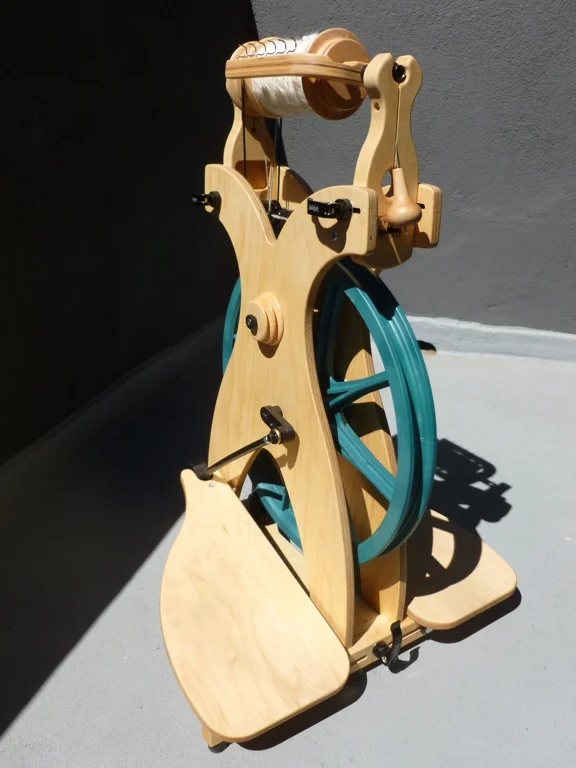
My New Sidekick

Schacht-Sidekick-Spinning-Wheel.jpg

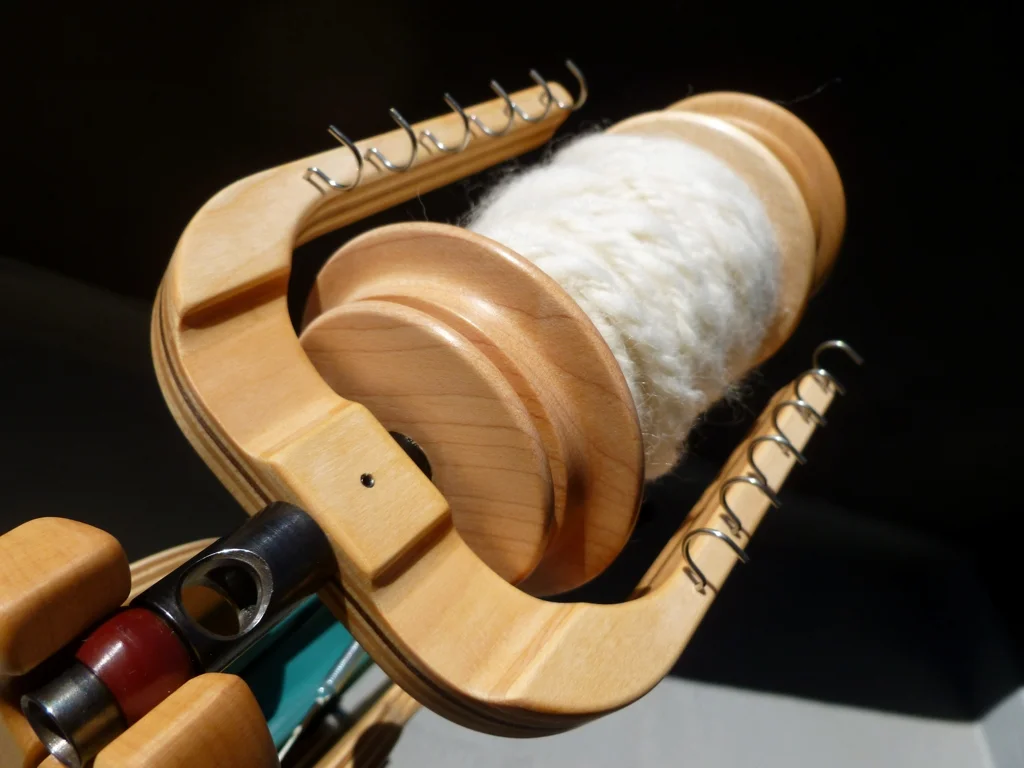
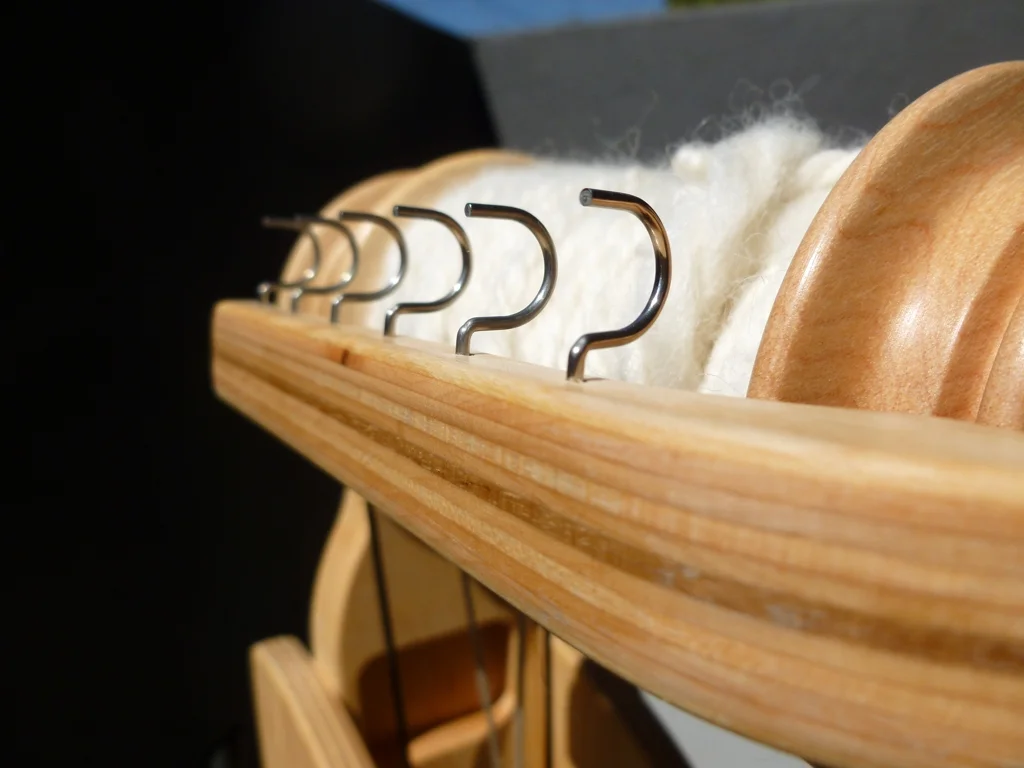
Yes! It finally happened. After months of research and reading reviews; after many more months saving up, not once, but twice, I finally bought my dream spinning wheel, a Schacht Sidekick!

Schacht-Sidekick-Flyer.jpg

When I started looking to buy my first wheel, I knew I wanted something that was compact, easy to travel with, versatile, and easy to use. After reading numerous reviews and watching videos, the Sidekick seemed to fit the bill perfectly. Despite having never seen one in person, I started saving up. Last Monday, September 23,  I held my breath and finally ordered a Sidekick from Village Spinning and Weaving.

Schacht-Sidekick-Flyer-Side.jpg

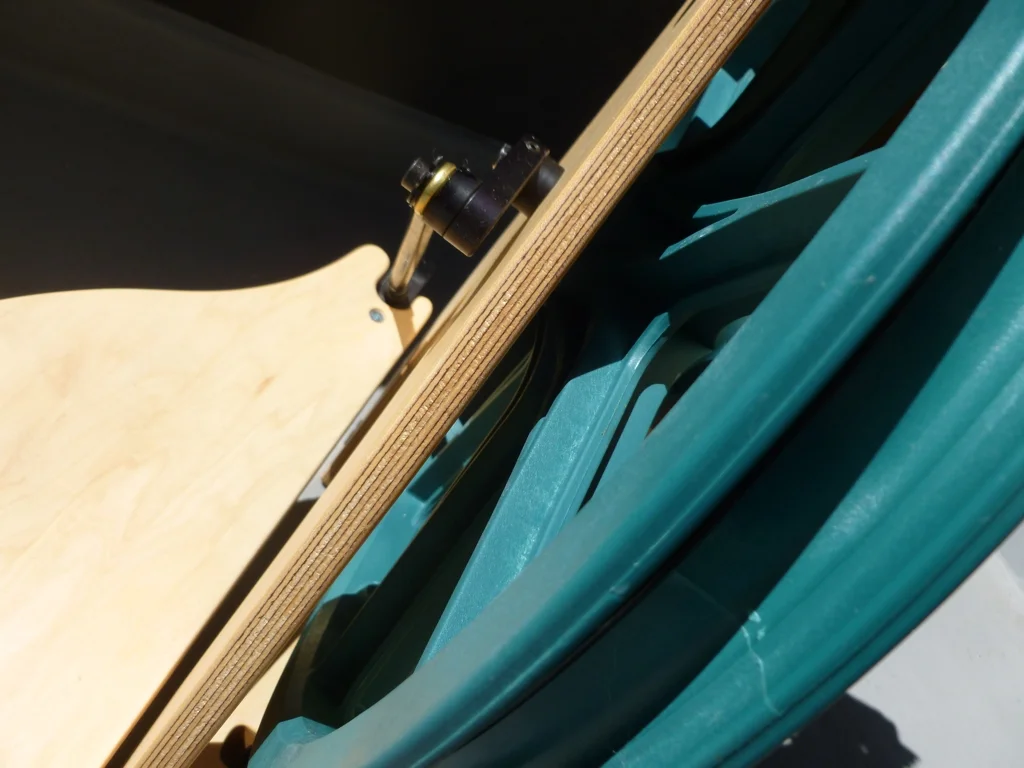
The blessedly few days of Wheel Watch 2013 were definitely exciting but nothing compared to that last day when the sound of every truck brought the possibility of getting my hands on my new wheel.  It finally arrived late Wednesday evening right before it was time to start cooking. Safe to say that dinner happened later than usual that night. It’s been less than a week but, so far, the Sidekick has met and exceeded all of my expectations. I’m absolutely in love and glad I’ve made the jump from spinning exclusively on spindles.

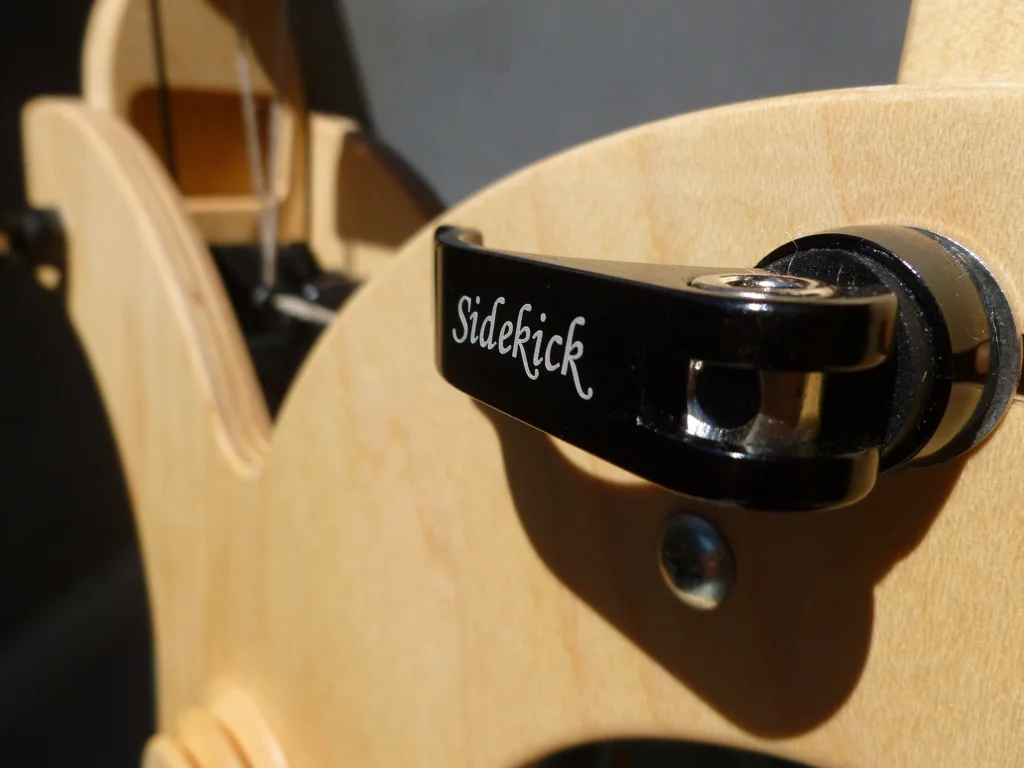
Schacht-Sidekick-Quick-Release.jpg

My first time spinning on the Sidekick was only the second time I’ve ever spun on a wheel. The first time was for 15 minutes during a mini lesson at Yarnhouse Studios, a lovely knitting, spinning, and weaving shop in Opelika, AL. That was a year ago to boot! After reading all the instructions in the box and setting up the wheel, I spent a few minutes treadling just to get used to the motion and rhythm. Then I had to figure out how to thread a leader through the flyer and the orifice. Then figure out why the yarn wasn’t being taken up onto the bobbin. Then, SUCCESS!, I was spinning yarn  on my new wheel. It was lumpy and bumpy and thick and I was pretty sure I’d be spinning unintentional “art yarn” for awhile; however, by the end of 2 oz, the single was fairly even and consistent.

Schacht-Sidekick-Wheel.jpg

I’ve since chain plied and finished that first skein and gone on to spin 2 more skeins in just 4 days. My last spindle-spun skein of yarn took over 3 weeks so this new found productivity is amazing. After hours of spinning and 3 skeins of yarn, I’m even in love with my Sidekick. Wish I’d gotten one ages ago and I’m looking forward to spinning on it for years to come.

Schacht-Sidekick-Maiden.jpg

Wander the Web 11

Schacht-Sidekick-Flyer.jpg

My new spinning wheel, a Schacht Sidekick, (Squee!) and I are getting acquainted. Before I lose myself to another few hours of spinning, here’s some of my favorite links from the week.

The Fallen 9,000 

Definitions of Common and Not-So-Common Fiber Terms (via @Lynn4MK)

Overnight Whiskey Applesauce; I want to get a crockpot just to try this recipe. 

Why (and How) Creative People Need to Say “No”

Archery Hall and Boxing Club by FT Architects

Negative Space of a House Cut into a 908 page book by Olafur Eliasson

Ark Nova is the world’s first inflatable concert hall. I wonder how it sounds. 


Pooling Yarn and What To Do About It

BlueRide-Kaleidoscope_WarEagle1.jpg

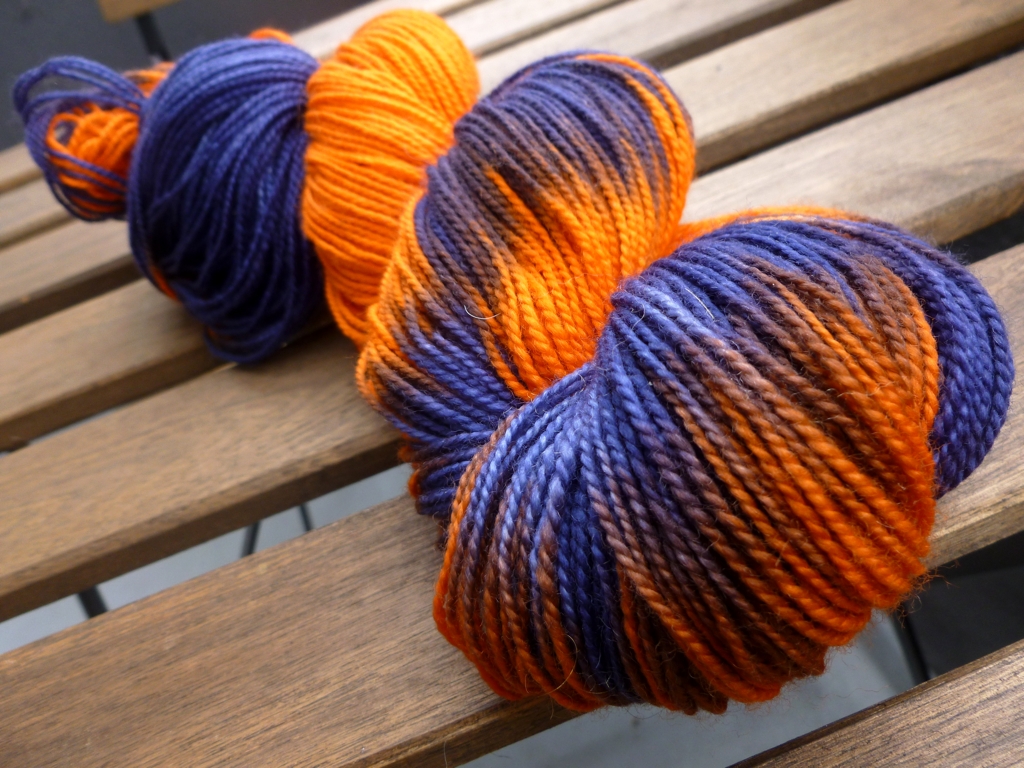
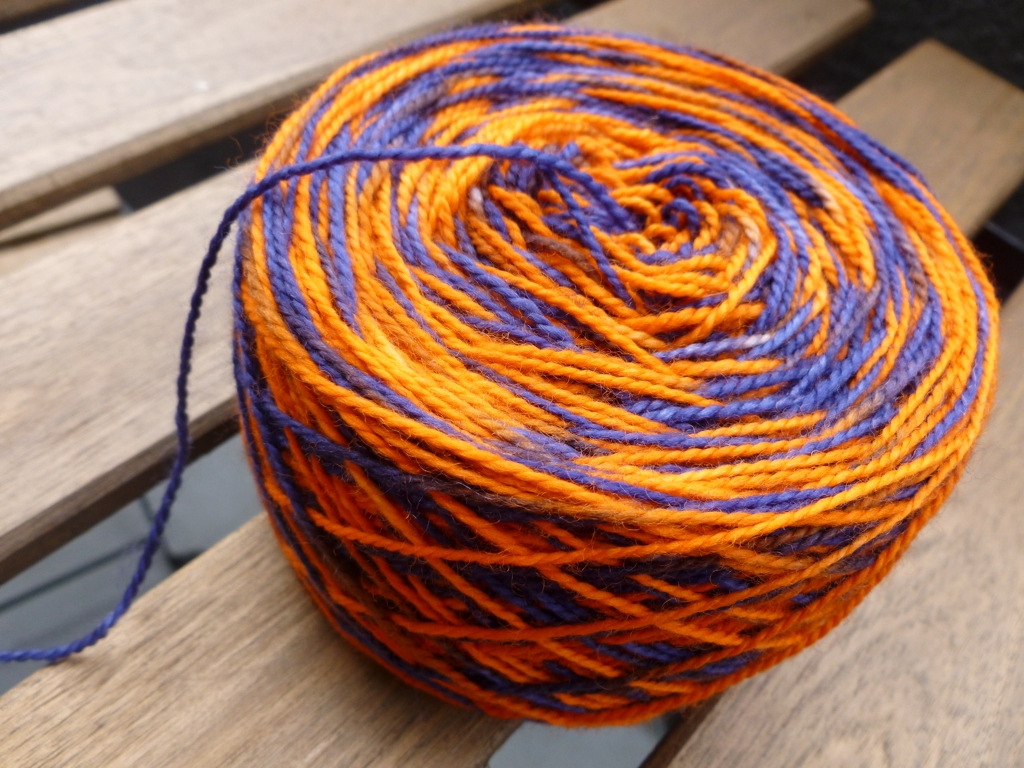
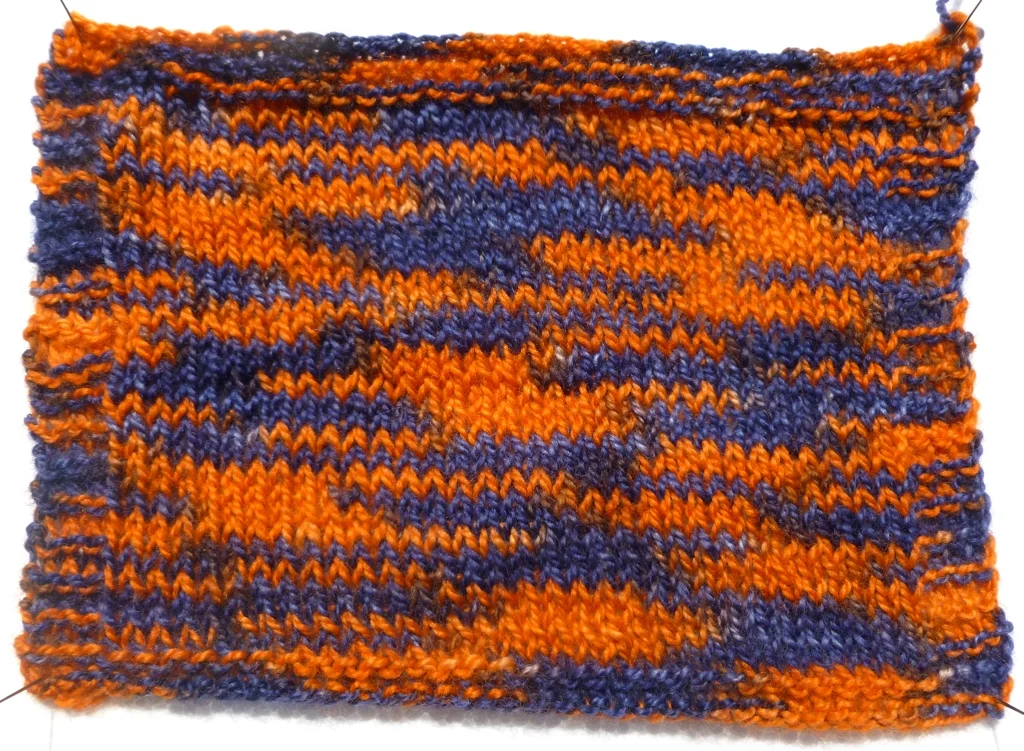
It’s orange. It’s blue. It’s sock yarn and it’s been in my stash for years. I remember buying it way back when in 2009, folks. At the time, I wasn’t worried about how the colors would knit up because this yarn was going to socks. Simple socks too. Whether they were ribbed or plain stockinette, it didn’t matter if the colors pooled or flashed or did any other strange things. Skip forward 4 years to 2013 and the yarn that would be socks is going to be a shawl instead. That changes things a bit. Suddenly, how the colors knit up matters a lot. Pooling and flashing are things to be avoided at all costs. 
What exactly is pooling and flashing? Pooling is when colors clump together and knit up into big splotches, AKA pools or puddles, of color. Flashing is similar to pooling in that colors clump but will stripe and move around like a bolt of lightening in your knitting.

BlueRide-Kaleidoscope_WarEagle2.jpg

So, I swatched the yarn by casting on for a top down shawl just to see what the colors would do. Once I got a few rows into the pattern, there was pooling and puddling. Puddles so big you’d have to jump across them if you found them in a parking lot. Even then, you’d probably still end up in ankle deep water. So, I ripped out the shawl and started experimenting with different and easy ways to mess with the color repeats. 

The variegated yarn I’m using, Kaleidoscope, was dyed by Blue Ridge Yarns and has the very appropriate color name of ‘War Eagle’. Most of the skein is dyed with short repeats of orange and blue where each color is 3” - 4”. Then there is a long section where each color is 12” long.

THE FIRST SWATCH

VariegatedSwatch1.jpg


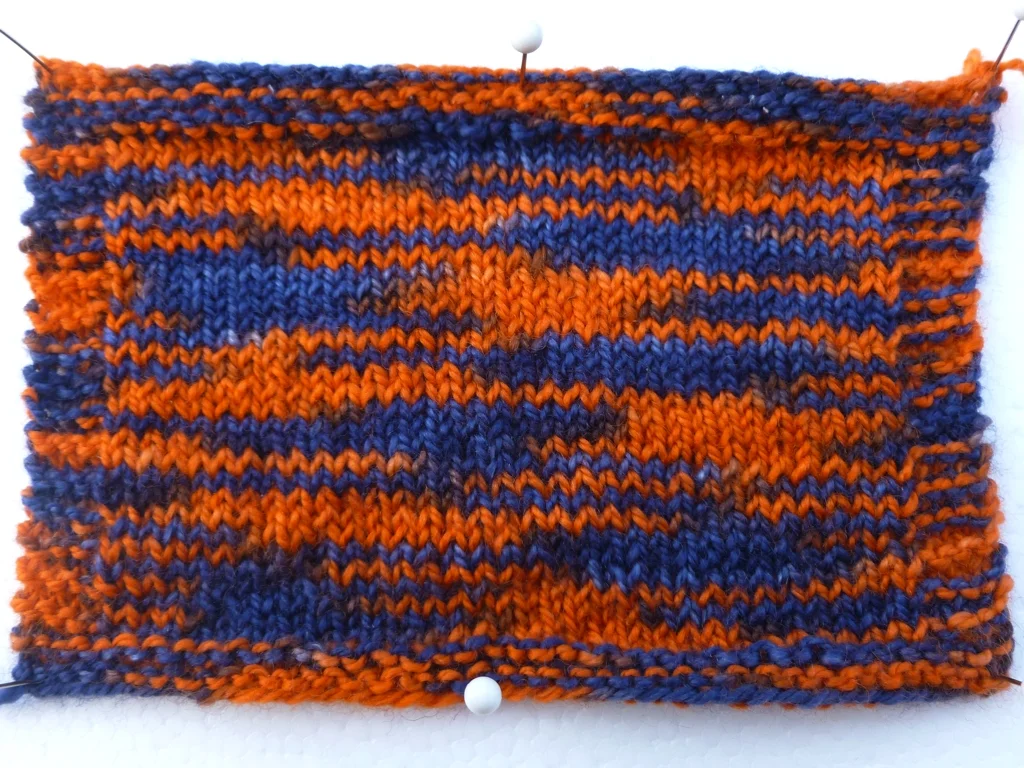
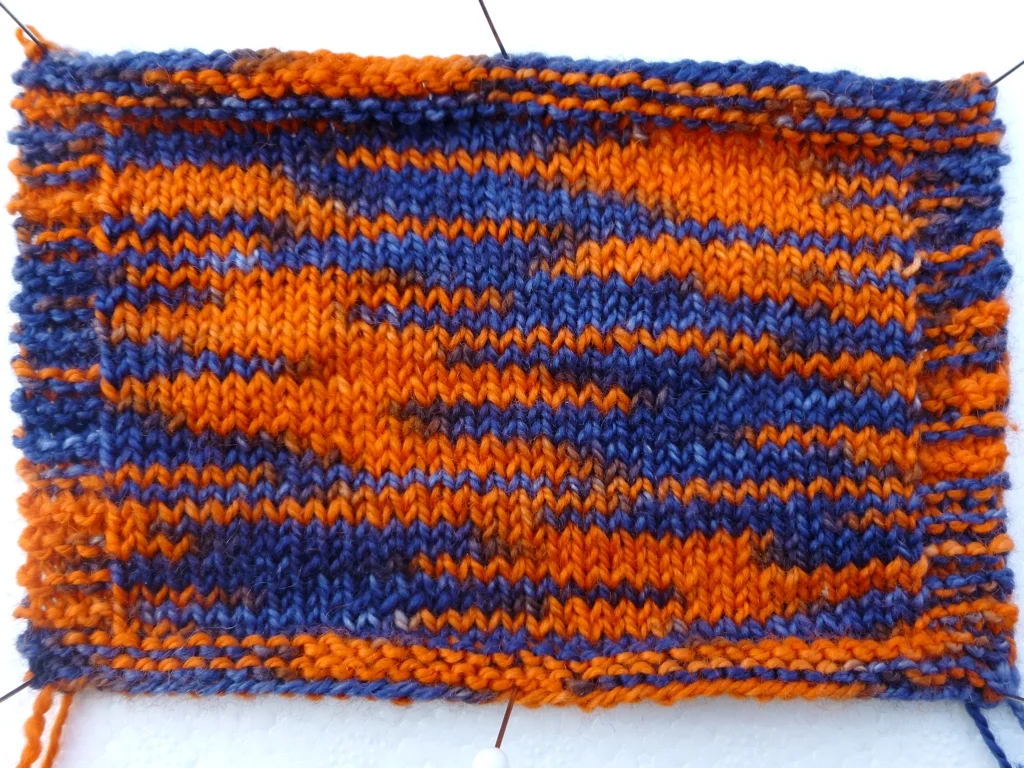
The first swatch and two other swatches were knit using the pattern below. Needle size was also the same except for the third swatch.

  • Cast on 40 stitches with the long tail cast on. 
  • Knit 4 rows of garter.
  • Knit 30 rows of stockinette.
  • Knit 4 more rows of garter and bind off.

The first swatch, knit on 2.75 mm needles, was knit to establish a baseline. It’s important to know how the yarn knits up if left to its own devices. Both colors make little pools but are interrupted by the longer sections of color. Certainly doesn’t look bad but what it doesn’t work for your project? First option, stripes.

THE SECOND SWATCH

VariegatedSwatch2.jpg

 Instead of knitting with one of the skein for the entire project, knit 2 rows with one end and 2 rows with the opposite end. If you have more than one ball of yarn, knit 2 rows with one ball and 2 rows with another ball. 

If the project is worked in the round, there’s one more option that is rather fiddly when knitting flat. Alternate the working yarn every row. You won’t have to worry about jogs or any of the other tell-tale signs of stripes since you’re working with the same colors. 

Switching the ends every 2 rows didn’t really work for this swatch since it created a textbook example of flashing; exactly what I’m trying to avoid. There is another option though.

THE THIRD SWATCH

VariegatedSwatch3.jpg

The third way to affect color in knitting: change the gauge. This last swatch is knit the same as the first but at a much larger gauge on 4mm needles. There’s a little pooling and a flashing but neither dominates the knitting. They kind of meld together to make a more cohesive whole. 

Just be aware that changing the gauge might not always work for a project. You could get away with adding 2 extra stitches per row to a garter stitch scarf. Adding or subtracting 2 extra stitches per 4” on a sweater is a recipe for disaster. So, if you like how a yarn knits up at a certain gauge don’t try to force the yarn and an incompatible pattern together. Find a different pattern that matches your preferred gauge and make something you truly enjoy.

CONCLUSION

The easiest options for combatting pooling and flashing in knitting are alternating the yarn ends every 1 or 2 rows and changing the gauge. All yarn is different, especially hand dyed yarn, and the only way to figure out the best option is to swatch. See what happens, experiment, and have a little fun with it. Don’t think of swatching as wasted knitting time. Swatching is like meeting someone new for coffee before going on a week long camping trip with them. There are some things you just need to know first.  


Spinning Blues

spinning-pencil-roving.jpg

Thanks to birthday gifts and great sales, I’ve been expanding my spinning library. The most recent additions are The Spinner’s Book of Yarn Designs by Sarah Anderson and Spin Art by Jacey Boggs. Both books are wonderful, inspiring resources and I’m reading them cover to cover. My fingers have been twitching to start spinning but I’ve kept reading on for more info.

paper-wrapped-spindle.jpg

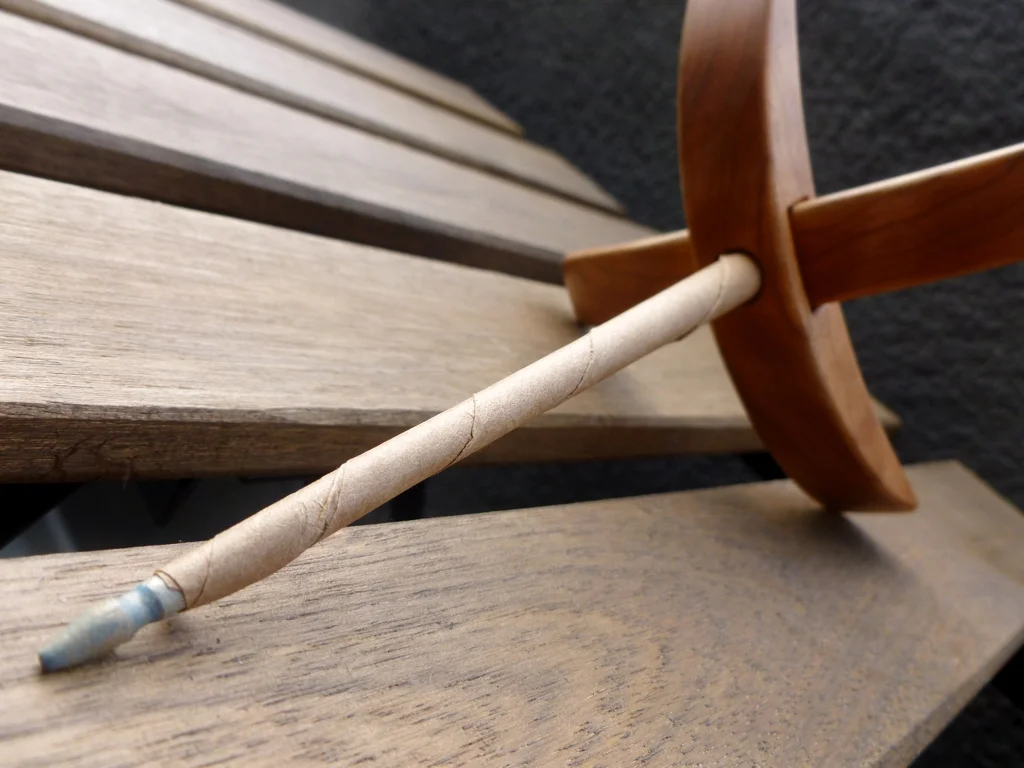
It was until last Friday I realized that I haven’t spun in weeks! My most recent project was half of the pencil roving I bought during Tour de Fleece. What’s the hold up? The roving was turning my spindle and hands blue. After I cleaned the spindle, posted a tutorial about it,  and the dye finally faded from my hands, I wanted to find a way to protect the spindle from more dye. I thought I had found a solution in a hardy strip of paper. Friday, before the arms went on my favorite turkish spindle, I wrapped the shaft completely with a piece of heavy paper. I could finally spin again and finish this yarn.  The problem was that every time I set the spindle turning, I was slowly unwrapping the paper. Not even tape held it in place. Eventually, I ripped off the paper and wound another strip in the opposite direction. That strip wouldn’t stay in place either. Completely fed up with the whole attempt, I ripped the paper off and just kept spinning.
blue-pencil-roving.jpg

My fingers and spindle are blue again but the spinning is easy and it isn’t as hard to draft a heavier single the second time around. I’m pretty sure using paper to protect a spindle can work but not for bottom whorl or turkish spindles. The method would probably be best for top whorl spindles if you left enough of the shaft unwrapped; there would be room to flick the spindle without touching the paper and releasing the wrap. 

Well, my first idea for protecting my spindle from extra dye didn’t work. The second attempt might involve latex gloves. Any suggestions or ideas to save my spindle and hands from unset dye?

Wander the Web 10

RippedYarn.jpg

Once ripped, the re-knitting of this tangled yarn pile has taken a lot longer than I thought it would. At least garter stitch makes it easy to read and knit at the same time. I’m rarely so caught up on my RSS feeds as I have been these last few days. Next up, that backlog of ebooks. 

Finding Freedom and Writing Memoirs with Meg Warden (via Rowdy Kittens)

Nuance AKA dancing with light. 

Ever wonder about different ways to finish handspun? This “Finishing Yarn” post on the Knitty Blog samples 5 different methods.

INeedAPrompt.com has churned out some interesting writing prompts. My favorites so far are “A fearless rabbit on the International Space Station,” and “A blushing octopus in the morning.” It’s customizable and good for a laugh even if you don’t have writer’s block. 

After watching this video about making multiple pom-poms at the same time, I have pom-poms on the brain. Won’t be able to resist much longer. (via All Untangled)

While we’re on the subject of pom-poms, make a giant one in 60 seconds. (also via All Untangled) 

I would have loved to live in this tiny house during college.

Mistakes Were Made

HandspunShawl1.jpg

Normally, this is where I would wax poetic about knitting with your own handspun. I’d talk about the spinning, the plying, the joy of custom yarn, the yada, yada, yada. Along with this ode would be a series of teasing photos which would show color and stitches but leave the project to the imagination. After all, I did pull the pattern from my imagination so the details have to remain hidden for the time being.  

HandspunShawl2.jpg

I’d love to leave you with this photo of colorful garter stitch but it just isn’t meant to be. Instead, I’ll leave you with this pile of ripped yarn. Can’t be helped. Mistakes and ripping come hand in hand when writing knitting patterns. There is good news though. The yarn handled ripping well and I’m back to knitting it up. Might just have a finished pattern and a new shawl soon despite my mistakes. 

HandspunShawl3.jpg

Grab Bag Goodness

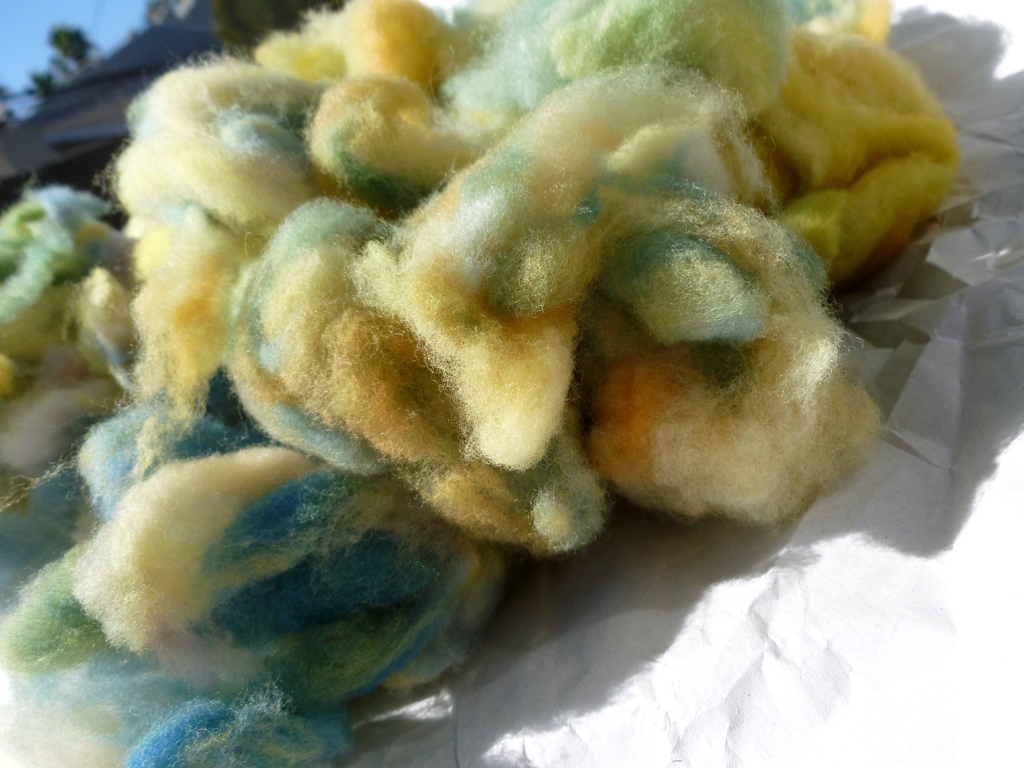
GrabBag1.jpg

Reason 3,548 to love the internet: You can see something you absolutely love and, after a few clicks, it’ll show up on your doorstep. That’s exactly how I ended up with these little bits and bobs of fiber from GwenErin. I slightly stalk her Etsy shop and, when she posted about having grab bags of fiber for sale on the cheap, I couldn’t resist. That was last week. This afternoon, the package was waiting for me when I opened the door.

GrabBag2.jpg

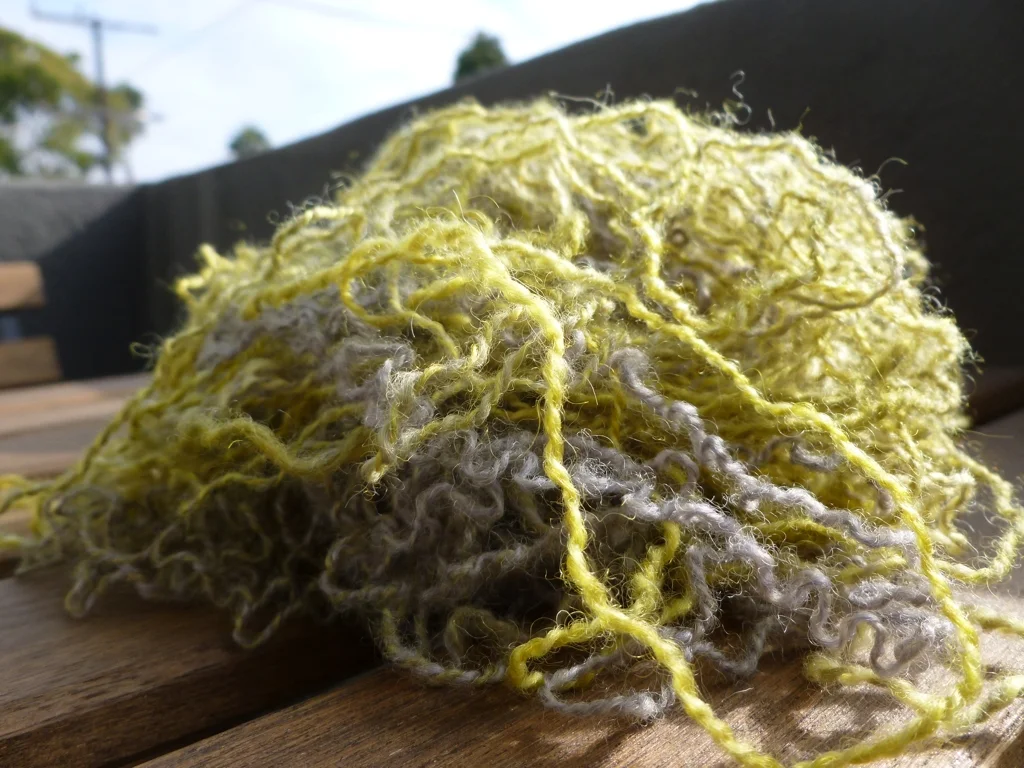
The longer lengths I’m going to spin and use for a  few of the constructions in The Spinner’s Book of Yarn Designs which is horribly inspiring. As for these smaller bits, I’m not sure since they’re not in large enough pieces to spin. Maybe I’ll use them for felted balls or take another try at needle felting. Hell, if none of that works, I can just use them as stuffing. Waste not, want not. 

Do you have any suggestions for what to do with small, leftover bits of wool roving? I’d love to read your suggestions.